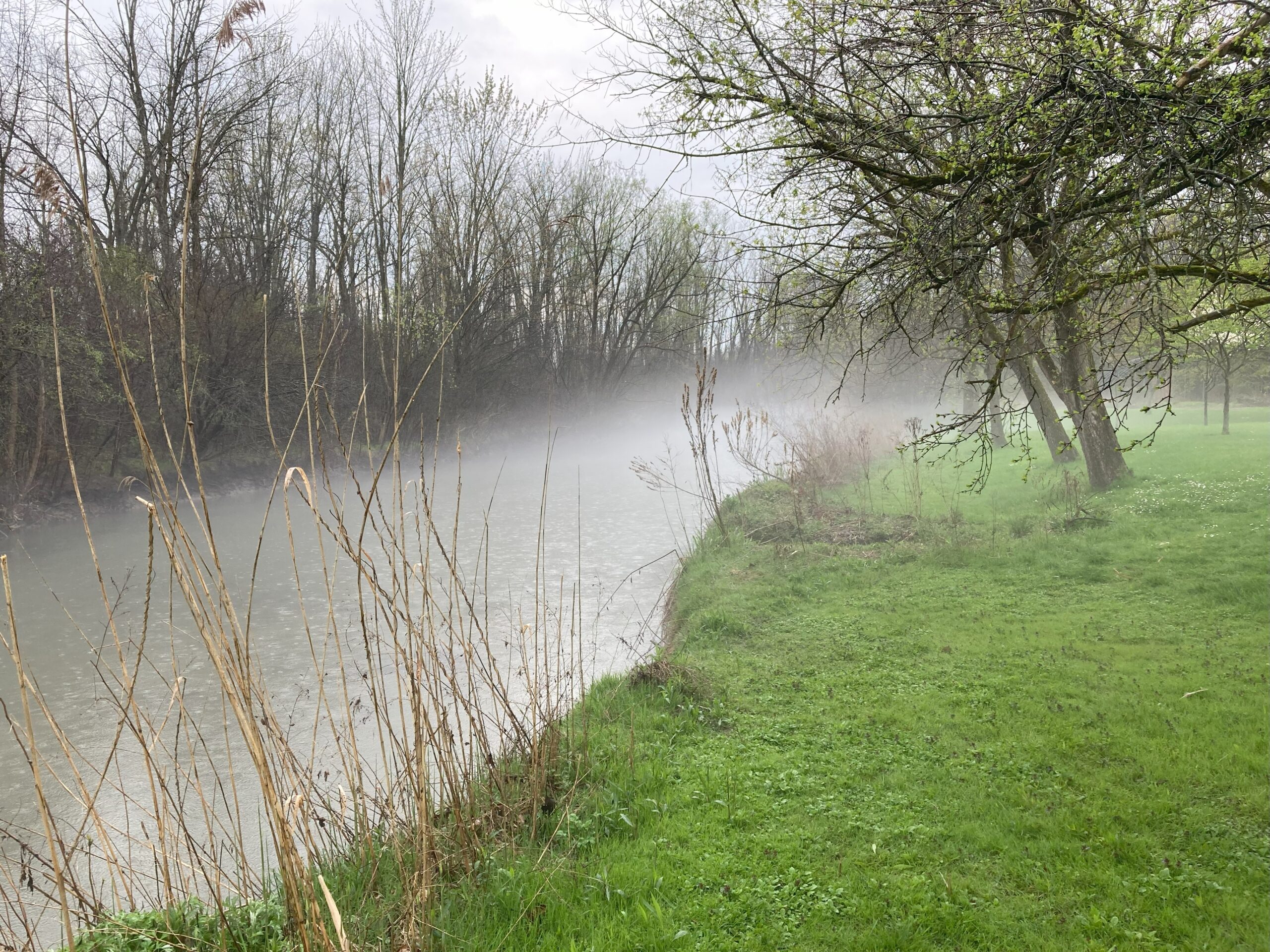
The camp was built close to water, but never close enough to protect us from it.
A creek ran between the rubber farms, cutting a narrow, patient line through the plantation. Rubber trees pressed in on both sides, planted as tightly as the land would allow. The company planted rubber in every inch of visible earth it could claim. Only water stopped them. You cannot plant a rubber tree in a creek. You cannot make profit stand still inside moving water. So the creek remained—not as mercy, but as interruption.
The trees leaned toward it anyway. Their roots crept close. Their shadows thinned the light. From above, the plantation looked seamless—green, ordered, efficient. Only from the ground could you see the thin line the company could not cross.
The camp followed that line.
Rooms were built near the creek because the creek already existed. It solved too many problems to ignore. Water for washing. Water for waste. Water that carried away what the plantation did not want to keep. No pumps were needed. No wells. No pipes rising from the ground like promises. The water moved, and because it moved, we believed it was safe. Movement passed for cleanliness. Brown passed for natural. Survival passed for design.
The creek did not begin in our camp. It arrived already carrying the lives of others. It ran through different camps before it reached us, gathering soap, ammonia, blood, latex, and waste along the way. By the time it reached our rooms, it had already learned other bodies. By the time it left, it had learned ours.
Every day began and ended with the creek.
Women rose early to fetch water for cooking, washing, and bathing children before school. Buckets moved in steady lines—metal, plastic, whatever held. Children were sent with smaller containers, warned not to fall, not to play, not to drink before bringing the water home. The warnings were rarely obeyed.
Bathing happened there too. Men washed off the day’s work—latex stains, sweat, ammonia used to preserve rubber milk. Soap foamed briefly, then disappeared downstream. Clothes were beaten against stones. Blood from small cuts mixed with dirt and detergent. Nothing stayed long enough to be noticed.
The creek carried everything away. That was its usefulness.
Latrines were placed close enough for convenience, far enough for denial. When they overflowed, rain finished the work. Waste joined the same path as drinking water. The system required no coordination, only gravity.
This was not chaos. It was infrastructure.
Children learned the creek before they learned letters. Before school, they bathed there—quickly, because the water was cold and time was not generous. Mothers scrubbed uniforms already yellowed by use, already stiff from soap that never fully rinsed out. Shoes, when they existed, were kept dry on the bank. Feet entered the day barefoot, already exposed.
Some children drank deeply before school, believing fullness would last until afternoon. Others were warned not to drink at all. The rules changed depending on who was sick, who had recovered, who had been buried recently.
School adjusted to the creek’s authority. Children missed class because of fever, because of stomach pain, because weakness did not announce itself loudly enough to justify absence. Teachers did not ask why sickness came in waves. Attendance records absorbed the loss quietly.
Illness did not arrive as an emergency. It arrived as routine.
Diarrhea came first, especially in children. Not the kind that sent people running, but the kind that thinned you slowly. Days of water leaving the body faster than it could be replaced. Mothers learned to watch for the signs—the way a child stopped asking for food, the way the eyes dulled, the way play became sitting.
We did not call it contamination. We called it running stomach. A phrase light enough to carry without accusation.
Malaria followed its own calendar. Fever was expected. Chills were familiar. The body learned to recognize the pattern before the mind did. You could feel it coming by the weight behind the eyes, the ache that settled into the joints like something returning to claim its place. Quinine, when it was available, tasted like punishment. When it wasn’t, endurance filled the gap.
Typhoid moved differently. It stayed long enough to confuse. A fever that did not break. A weakness that lingered. A silence that replaced complaint. By the time it was named, the body had already negotiated its own terms.
The creek was never mentioned.
We did not trace sickness to water because the water was constant. It was always there. What harms you slowly learns to disguise itself as normal.
Not all camps were equal, and the creek carried that truth without apology.
Upstream camps drank first. Their waste arrived later, diluted by distance and denial. Downstream camps learned caution early. They learned to wait after rain. They learned to skim. They learned to drink from edges rather than center.
Hierarchy followed gravity.
No one announced this order. It did not need explanation. People knew where their camp stood by how the water arrived. During dry season, the creek slowed. During rain, it overflowed, reclaiming paths, entering rooms, reminding everyone that containment was temporary.
The plantation never mapped this system officially. But workers understood it instinctively. You could tell how close a camp was to favor by how much distance the creek had traveled before reaching it.
There were no hand pumps in the camp. This, too, was explained.
A pump would make people lazy, they said. People would stop walking to the creek. They would waste water. Clean water, we were told, changes behavior.
What was left unsaid mattered more.
A pump comes with cost. A well must be dug. It must be cleaned. Water must be filtered. Broken parts must be repaired. Someone must be trained. Someone must be responsible. Someone must answer when the water makes people sick.
A pump creates expectation.
Expectation invites complaint. Complaint invites inspection. Inspection invites accountability.
The creek required none of that.
It cleaned itself by moving. It filtered nothing. It asked for no spare parts. If people got sick, it was their bodies that failed, not the system. The clinic treated symptoms, not sources. Fever was measured. Stool was observed. Bodies were addressed one at a time, as if illness traveled alone.
Fetching water required time. Time kept bodies moving. Movement prevented gathering. Distance kept people tired. Fatigue discouraged questions. The walk to the creek and back was unpaid labor folded into daily life, training bodies without calling it training.
Water was not just infrastructure. It was discipline.
Rubber trees were permanent. Camps were not.
Trees received care, spacing, calculation. Bark depth was measured. Yield was tracked. Rooms could be rebuilt. Workers could be replaced. Children could be buried quietly.
The plantation did not need us to live well. It needed us to live long enough.
I no longer drink water without thinking about where it has been.
Even now, when water comes clear from a tap or sealed bottle, my body hesitates. I smell first. I watch how others drink. I wait. Clean water still feels borrowed, not guaranteed.
Certain smells still return me to the creek—soap mixed with rust, wet rubber bark, ammonia sharp enough to sting. The body remembers systems longer than the mind does.
I learned later that clean water is not just about health. It is about dignity. It allows you to stop thinking about survival long enough to imagine something else. The plantation could not afford that pause.
The creek still runs between the rubber farms. The trees still press close to its edge, stopping only where they must. The plantation remains efficient in its memory.
And I remain careful.
Not because the water was always deadly, but because it was never innocent.
MARVIN GARBEH DAVIS, SR. is a Liberian writer and poet whose fiction and nonfiction explore the intersection of memory, labor, faith, and the human condition. His work draws richly from plantation histories, river communities, and Liberia’s shifting landscapes. He is the author of Man, Rubber and the Devil and lives in Monrovia, Liberia, with his wife, Angea.
RON THEEL is a mixed media artist and freelance writer living in Syracuse, New York. His writing and art have appeared in Pithead Chapel, Beyond Words, Open: Journal of Arts & Letters, and others.
