I uncover what I have touched, contaminated forever
with touching, the America of it, the victory, beach sand
affixed to the soft tissue of memory. So clear the heavy wind
I can’t ever touch it, the home untouchable. A letter
caught in vicious gust and flung 2,823 miles over an ocean
is an uneasy document. To name the location is to make it,
yet this doesn’t always reach. If I can say you are home,
Terceira, if I announce love, if I present a choir—
their robes sheets of written-out ways I miss you—
will this reach? Dear location—yes as in letters—
would I leave you again if I tend the documents
saying nothing of the process of healing, if I repeat
the fixed assignment of symbols and not another?
I reach, letter after letter, stasis unfolding as a hand
tired from too tight a fist. In the framework of the document
I reach for you. What contaminants I find teem, memory
intervenes, all mirror documents shivering their way into word.
So too I write Dear Sea Wall, who fortifies with ancient stone
the city I childed—forever I leap down from your height
avoiding the field of broken glass and the long crash
however cushions the sand. So Dear pool of black rock
at Biscoitos—though I did not swim I watched the foam
emerge out of the sea, and I feared how it moved like a living being:
heave of breath, shade of vomit, my shoe ever mindful
of its affiliation with the concrete swerving walkway white
as a tongue made of bone. Dear boyfriend of Jason’s mom—
you are a very faint memory, but I once gave your name
to a G.I. Joe, Carlos, and you were father to my favorite
toys. I made a family of your name and I am so sorry
I lost them. Even now I look for them in flea markets
and I know never to find them until I can find your face
in my memory and not just a brief shot of short obsidian hair
and a vague kind of friendliness, sieve of language barrier—
I still flail, unversed tongue. Dear Davíd—I taught you in our alley,
vizinho, to kick a ball, a laugh a sound we both found we knew.
Are you alive today with a family—a son as small as you?
Does he chase after stray dogs all through Praia—offspring
of offspring of those who passed our windows in the night
their hungry paws sniffing and clicking the stones not yet
transfigured with paving (that day of machine and tar)? Is it
you who have found yourself undone living in a fuel-soaked place?
Dear jellyfish—we tried to save you, scooped you out the sand,
filled the pail with ocean, and made the wishes of children,
and you, defeated by our awful air, suffocated in the quiet dawn
before we ever woke. You floated and we gave you
the unavoidable love that kids have to give to what they see
as wild, then we poured you back into the sea.
Dear Juvenalia—parent to me for a brief year, I never said
adeus, obrigado, desculpe. You arrived me fully
into the soft reach of Terceira, and I cling to you in return.
“Forging a Letter to Reach You” is a Homophonic translation of an English translation of “Vice-Presidencência Envia Carta ao Ministro dos Negócios Estrangeiros,” an article published by Diário Insular on February 9, 2021.
RYAN CLARK is a documentary poet who writes his poems using a unique method of homophonic translation. He is the author of Arizona SB 1070: An Act (Downstate Legacies) and How I Pitched the First Curve (Lit Fest Press), as well as the forthcoming chapbook Suppose / a Presence (Action, Spectacle). His poetry has appeared in such journals as DIAGRAM, Interim, SRPR, and The Offing. A former military brat, he now lives in Chapel Hill, North Carolina with his partner and cats.
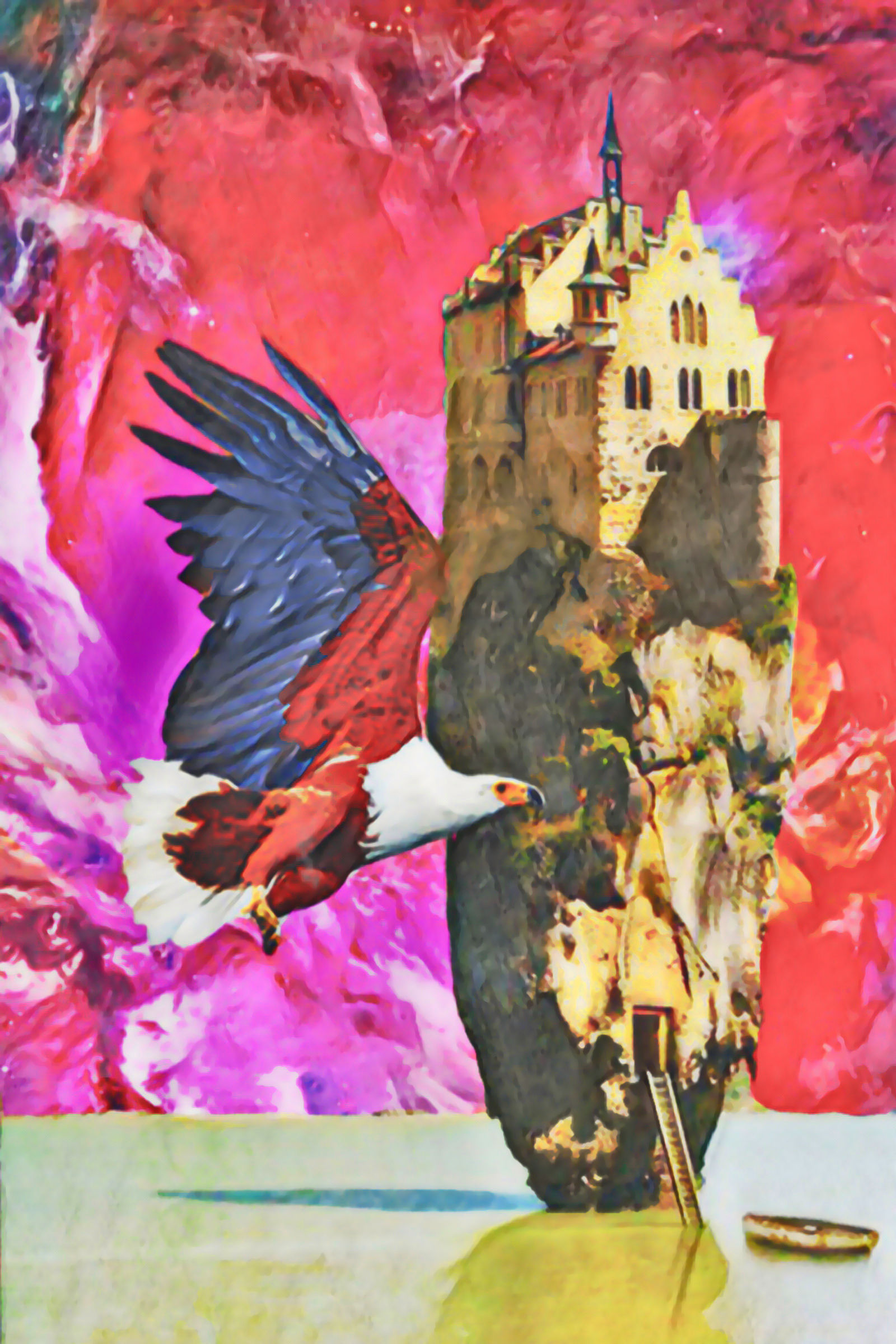
BRIAN MALACHY QUINN uses watercolors and digital media. He is compelled to create art and does so every day and finds it as a way to put aside his worries and stresses and produce “good brain chemicals.”
