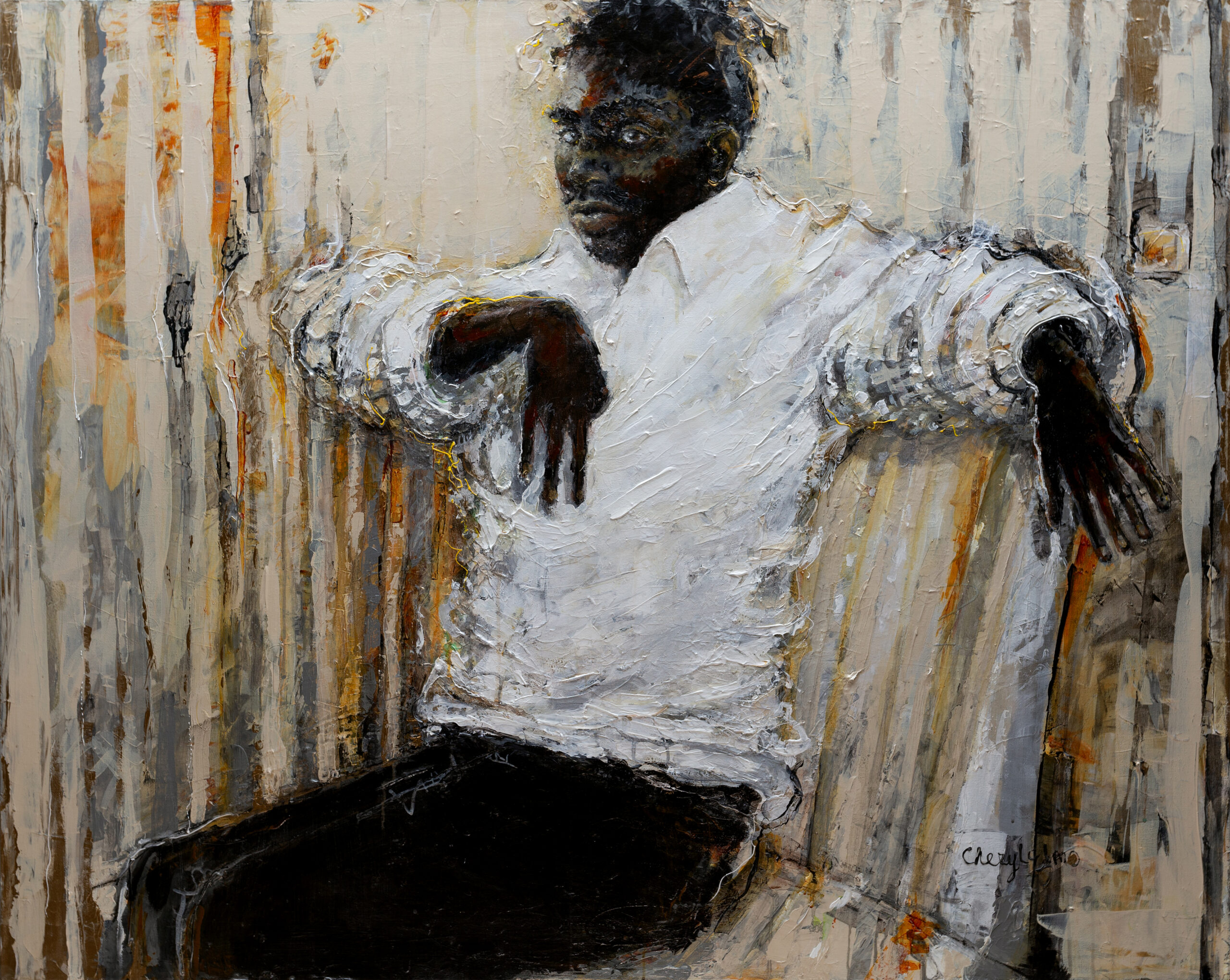
This story is a product of the MAYDAY:Black Incubator.
It doesn’t take long for a child to realize they’re poor. No longer than the moment they’re exposed to something more. I was in the fifth grade.
After waiting in line for an hour at a charity event, I received just one present, an astronaut Lego set, but I was so happy with it. Then, back from Winter Break, hearing about the scooters and Xboxes my classmates had received, I was disillusioned. Indescribably so. Why was my family poor and others weren’t? What could I, an eleven year old, have done to deserve less? I felt it must have been a cruelty from God. Nothing else made sense. This set me on a long path of questioning.
I could see signs of poverty before I could read them. I was diagnosed with depression in kindergarten. I sensed something was wrong. I remember the mail that would come with aggressive red markings, and I learned not to talk to Mom when they did. I recognized concern on her face every time. Later, I would learn that most people don’t receive these letters, that not everyone lived as we did.
By the age of twelve, I felt sure of three things: I was poor, I had less, and life was unfair. Along with my stark reality came despair, jealousy, and a profound sense of anger.
Despair descended first.
I felt trapped. Thoughts of dying in poverty and being forgotten became my greatest fear, and maybe my greatest blessing. It motivates me to be the best, transcendent in all I do. It pushes me beyond what I think is possible. At the same time, I believe it’s a curse. Any happiness buys me just a little more time, then gives way to melancholy.
Then jealousy.
I am jealous of everyone around me. Of humanity. For being able to live, to be happy, to have connection. And the jealousy turns to downright envy, which I doubt most people have felt. Envy isn’t just the desire to have what others have, but a desire to have anything at all.
My desire for more is justified. No one has any more right than I to food, education, and power, but as a Black man, for my share, I must work exponentially harder while others achieve more through exploitation. This is not some miscalculation in the system that, once reported to those in charge, will be immediately corrected. The system is working in the manner it was designed to benefit those in power. It’s not some fluke. This realization, added to my life experience as a Black man in America, makes it all infinitely worse.
I knew early that I would achieve nothing by conventional means, that I could die trying to achieve a success that would mean nothing more than my basic survival. This is what leads to anger.
We had just been evicted. We were packing. I was in the sixth grade, by this time. My teacher had warned me about doing homework in class. If she caught me, she’d take it away, she said, but I had to do it at school. There was no time at home.
Then I was caught. She took away my paper, and something snapped. The next thing I knew, I was in the principal’s office being suspended, and realizing my only hope in life was to be extraordinary.
Then anger.
It was around this time that I began to grow from a boy whose cuteness forgave his blackness, to a man whose blackness became his defining characteristic and could not be ignored. Somewhere in puberty, I became indelibly Black. Those close to me looked at me differently. I don’t think they meant to…
Like so many, I have stories of overt racism, too—slurs, some Asian women crossing the street to avoid me, being singled out and asked to leave my bag at the front of the store. Those are all annoying—don’t get me wrong, but sifted into all the ways of the world that loom larger and shape a Black man’s life, these things are small.
I know I am a threat by my blackness, but not just that. It’s being Black and being a man. It’s their onerous truth that I must live with. It sits in the back of my mind and whispers in my ear. Don’t bother going up to that white girl at the party. Not worth it. Too risky. Don’t disagree with the white teacher. They might take it for disrespect. Don’t go there on campus. That’s a white area. It’s infuriating. It’s an oppressive force. It wears me down.
To live in a country established on the backs of my ancestors, without repayment for their suffering and contribution, often treated as a second-class citizen, it gnaws at the soul of a Black man until, against his will, he becomes the stereotype.
ULYSSES HILL is a 2023 YoungArts finalist in creative nonfiction and a student at Dartmouth College. A Pasadena native, Ulysses writes romantic short stories, nonfiction narratives, and essays. He’s nineteen years old.
