Yesterday at the swim club in Berkeley, two women about my age were sitting in the hot tub, giggling about adventures on beaches along the opposite coast. I joined them. When they asked about my teenage memories of the same, I hesitated. I don’t know them except as our paths cross at the pool. I appreciated their friendliness, but I suspected they hadn’t considered the response that might come from a Black woman in her early seventies.
My parents taught me never to discuss race in conversation with white people, even if they were friends, because it was impolite, they said, to make anyone uncomfortable. These women were enjoying a lighthearted conversation, and I knew I would spoil their buoyant mood if I were to say that beaches in Maryland and Virginia were only starting to integrate in the early sixties when my family moved to nearby Washington, D.C.
Unlike many Black people, I know how to swim. My mother sent me for lessons at the YMCA in Hyde Park, which had integrated before we left Chicago. Most public pools across the country still had not.
My mother wouldn’t draw attention to race in mixed company. This led to some absurd situations, like the time my white brother-in-law drove my mother to Savannah to see her parents’ gravesites, but couldn’t find them where he was looking. My mother, who was very fair-skinned, but colored all the same, was embarrassed to explain that they should be looking for her parents, who died in the late 50s and early 60s, in the colored cemetery, not among the whites. He figured it out. Even the most liberal white people have trouble resonating with the cradle-to-grave span of segregation on a personal level.
My parents lived in a time and place where a disagreement with a white person was dangerous. Laws have changed, but I’m aware that this club where we sit and talk right now, would not have welcomed my family when I was a child.
“Well, I grew up in Washington, D.C.,” I answered. “The nearest beaches, in Maryland and Virginia, were segregated.” They stopped laughing. It makes me uncomfortable also, to think and talk about segregation, yet I feel compelled to speak up. “It’s so hard to believe,” one murmured.
Yes, it is hard to believe the rigidity of segregation. It was violent and it was enforced. While most whites could pretend that Black people didn’t exist, and white media ignored us, Black people had to be aware of whites, to stay out of their way.
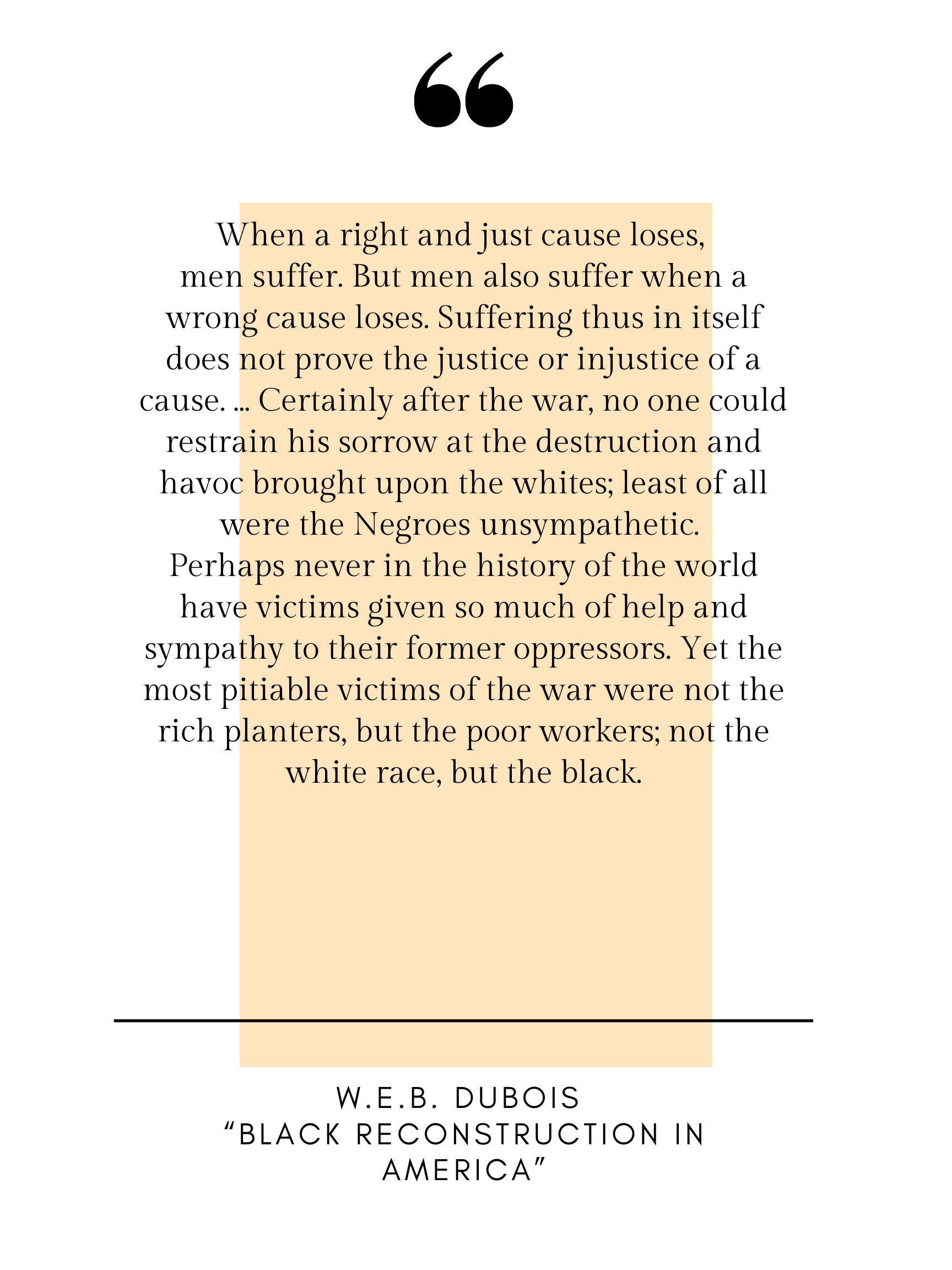
Immediately after the Civil War, white southerners started a campaign of disinformation, claiming the Lost Cause was a just and heroic war, and nothing to do with slavery. When legal segregation ended, so did their white guarantee to be first in line, keeping Blacks at the back.
Just before the 2016 presidential race between Hillary Clinton and Donald Trump, sociologist Arlie Hochschild published “Strangers in Their Own Land,” asking us to have empathy for white Louisiana folk. She described their emotional “Deep Story” of having waited patiently for their American Dreams, as Blacks and women and immigrants achieved success by cutting in line, a variant of the Lost Cause fictional narrative.
“[A]s a matter of pragmatism, we have to take emotion seriously and do what feels unnatural: get curious and caring about the other side,” were her beliefs, expressed in a podcast summary. Later, with Trump in office, Hochschild added an Afterword to Strangers, backpedaling the “Deep Story” as solely emotional, not factual, and again shared statements from her friends, without comment.
“The homeland he imagined was very like that in which his own ancestors—poor white Kentucky farmers and horsemen—had grown up,” Hochschild wrote, “and in which there were no slaves.” Maybe this man’s family owned no slaves, but for sure “[b]y 1830, slaves constituted 24 percent of all Kentuckians.”
As we face another election with a former president as a contender, the same who showed no more respect for truth while in office than on the campaign trail, we Black people must brace for another onslaught of distortion and denigration.
Almost a hundred years later, Hochschild and other white liberals still urge us to focus on their feelings rather than the truth of our own experiences. When white liberal feelings are based on fiction, not fact, they make empathy difficult for me, so friendship as well.
There were a few awkward moments after I spoke about racial segregation in the capital region, but in subsequent encounters, we three old ladies remained friendly. It is always easier to sidestep conversations about race, but to the extent that avoidance protects white people from the truths of Black lives, reconciliation is delayed.
—
TONI MARTIN is a Black physician and writer, author of When the Personal Was Political: Five Women Doctors Look Back. Her essays and stories have appeared in The Threepenny Review, The East Bay Express, and other publications.
