
Howard Phillips Lovecraft has been dead for over eighty years, but his influence on supernatural horror fiction is well documented, and respected in most literary circles today. Since his death, he’s become a cultural icon, credited as the father of cosmic, or “Lovecraftian,” horror. The genre originally revolved around the foreign, unknowable, incomprehensible, looming threat – the malevolent and persistent drive of an entity to take over and destroy White Anglo-Saxon culture and everything good, one and the same to Lovecraft.
What has been recorded concerning Lovecraft’s racism seems centered on a few key concepts, and based in fear:
First, perceived loss of status for people of English descent, specifically their prominence as the presumptive “preeminent” race in the world.
Second, the threat of interracial relationships destroying White culture.
Third, that non-White people were not only genetically inferior, but also, the embodiment of cosmic horror, the sentient, malicious “boogeyman.”
On one hand, Lovecraft depicted diverse ethnic and racial groups as ignorant, untrustworthy, uneducated, depraved, mean, savage, oversexed, immoral, perverse, insidious, inept, and lazy must-be-defeated malefactors, among other things; but on the other hand, his own ineffectual boogeymen were utterly determined, with a high chance of success, to eradicate the White race.
In his writings, Lovecraft equipped racialized persons with souls and spirits so they were conscious and self-aware. He also ascribed to them godlike attributes, so they were all-powerful and omnipresent. All of this is curiously at odds with his own writings on their inherent incompetence.
“Lovecraft took to pen and publication with the most grotesque appraisals of those he deemed inferior,” notes Wes House in “We Can’t Ignore H. P. Lovecraft’s White Supremacy.”
An extremely racist and bigoted white supremacist, he’s even been associated with Adolf Hitler. His contempt for Black people is exhibited in his poem “On the Creation of Niggers”:

Enter bestselling, multi-award winning contemporary Black novelist N.K. Jemisin, considered one of the most talented authors of our time, and a brilliant academic unflinching in her social commentary, especially on matters of race, marginalization, and bigotry. She disagrees with the idea of Lovecraft as “the father of modern fantasy.”
Speaking of her timely, thought-provoking urban fantasy-horror novel The City We Became, Jemisin said “It’s basically me mentally and spiritually engaging with the whole idea of how so much fantasy owes itself to Lovecraft, while overlooking his glaring flaws. It’s kind of a deep dive into how pathological racists think.”
Lovers of Lovecraft, be warned: Jemisin uses her writing to deconstruct the whole concept of Lovecraftian cosmic horror, unceremoniously dumping HPL’s racially-motivated boogeyman on its head. Whereas Lovecraft made non-White races the big bad monster, Jemisin reveals the real boogeyman in White people who are prejudiced and bigoted. Ironically, The City is an anti-Lovecraftian tale, both inspired by the man and illuminating his xenophobic bigotry. Jemisin doesn’t attempt to separate the artist from the art. She indicts him and shows that his cultural impact is weakened by his bigoted views.
The City is partly an homage to New York as “the melting pot,” idyllically symbolic of altruism, diversity, acceptance, and opportunity for all, while also condemning colonialism and gentrification, White privilege and supremacy, and racial injustice. Addressing these conditions in the Irish Journal of American Studies, Carolann North wrote, “The conflict between racial equality and white anxiety is the central point of interrogation…not merely physically but through political pro-white narratives and [manipulation] of racial and economic otherness.”
Jesmin’s NYC is clearly depicted as a microcosm of the greater United States. Its premise is that all cities evolve into sentient beings, and through humans, create avatars to protect them from “the enemy” who originates from an alternate reality. The antagonist sows discord, broad scale dissension, and divisiveness with devastating consequences for the characters.
Though born in Iowa, Jemisin encountered a series of distinctly southern Black American experiences in Mobile, Alabama, where she moved with her mother after her parents’ divorce – a cross burning, a murdered Black teen, “a lynching, in the nineteen-eighties,” she recounted during an interview with The New Yorker.
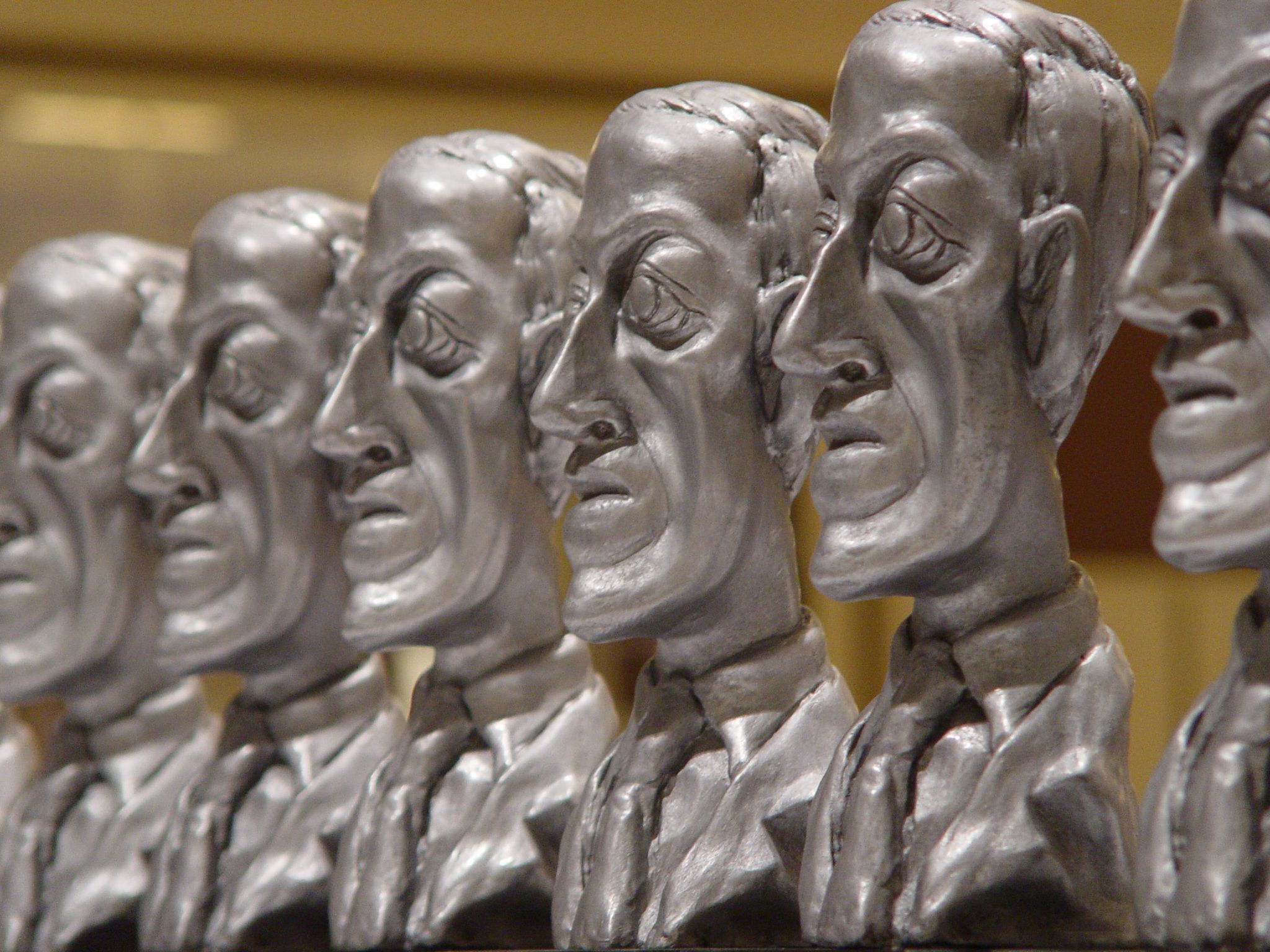
A courageous writer with three consecutive Hugo Awards, Jemisin holds one of the most prestigious literary honors anywhere, especially bestowed upon a Black writer committed to shining a light on such combative forces. In both her novels and interviews, Jemisin has demonstrated a level of comfort when calling out members of the literary establishment, like in this challenge to the World Fantasy Convention’s decision to make Lovecraft the image of its award, essentially honoring him:
“ …their award statue was a bust of H.P Lovecraft’s head and many authors complained about that…[Y]ou just saw writer after writer … coming out and saying, ‘Sure, he was racist but…’ and there’s just not a good ending to that damn sentence.” The Convention eventually changed the image of the award, Jemisin noted during the interview.
In The City, Jemisin is saying that the real Lovecraftian “cosmic horror” is the boogeyman terrorizing our world, and the warfare that must take place isn’t that of division, pitting Whites against non-Whites but, instead, a gathering all human beings, irrespective of race, color, gender or non-gender, ethnicity, religion, creed, and sexual orientation, unified against all forms of racism and bigotry.
In The City We Became, one brilliant novelist writes with hope in the 21st century about what another brilliant and celebrated, yet fearful, novelist wrote in the 20th century, and shows us that we can grow, that evolution is possible, even in a cosmos still creeping with very real horrors.
P.L. STUART is the fantasy novelist of A Drowned Kingdom, the first of a saga series, noted by Kirkus Magazine for its extensive, imaginative worldbuilding. Stuart lives in Ontario, Canada.
