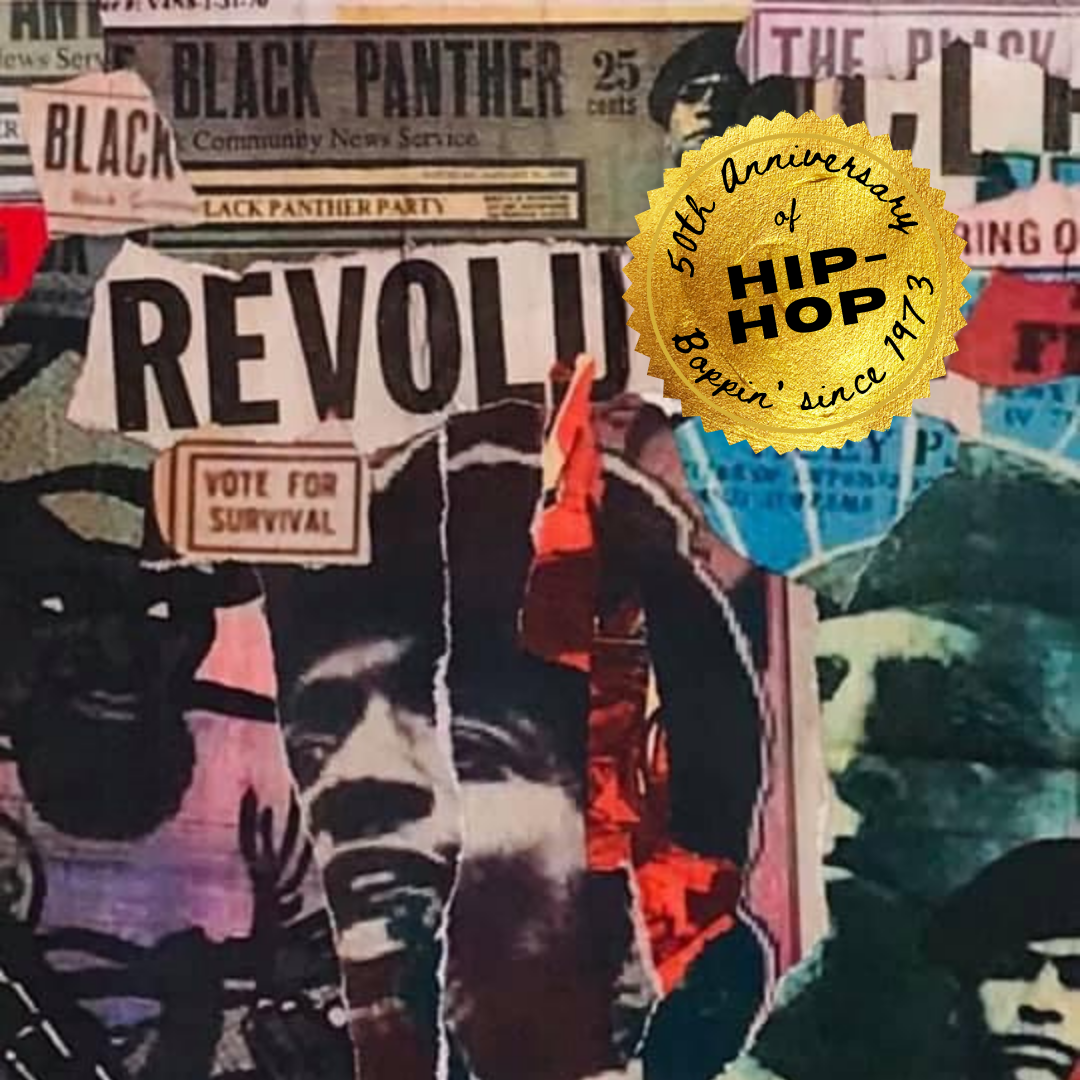
This story is the inaugural product of the MAYDAY:Black Incubator.
On an August night, sealed with frizzy edges and afro pick salutes, fingers caress vinyl darker than the night sky. From that moment, Black American culture orbited turntables in a South Bronx neighborhood, and young hip-hop grew to become a bold storyteller and an agent of change.
It was a response and a movement demanding accountability for conditions of Black displacement displayed in abject poverty, abuse within the judicial system, and conflict between an oppressive music industry and artists from marginalized groups. Hip-hop became the battle cry of the unheard, a revolution of breakbeats, bass, and backbone, narrating the effects of injustices in the post-civil rights era of the 1970s, and a bullhorn for a community threatened to stay silent through erasure.
And it don’t stop.
In Grassless Jungles on the 1s and 2s
Street poet pioneer Gil Scott Heron served as a springboard and an echoing boom for emerging pens to create anthems. Listen to the language of the forgotten in Heron’s 1971 “Home Is Where the Hatred Is.” Hear the resistance of the disenfranchised in “My Way Home,” a collaboration of rhymes over smooth transitions, mixed, remastered and released by Kanye West and Common almost 35 years later.
The young smoke in grassless jungles
Rubberband together in cashless bundles
“My Way Home” by Kanye West and Common
In 1973, an 18-year-old Clive Campbell, also known as “DJ Kool Herc,” or “Hercules” by the block, engineered history on speakers and amps that belonged to his father. Herc was a force behind different aspects of hip-hop culture, like graffiti and the “breakbeat” – a combination of dance drum solos patched together and extended to encourage dancers in the crowd to bust a move.
On the 1s and 2s, Herc fluidly mixed fragmented favorites from the past with dance songs popular at the time, creating a new world within inner city New York. A hot single by The Isley Brothers’ that year, my late great aunt’s favorite, “That Lady,” is tucked between sheets of new age rap in Kendrick Lamar’s “I.” It reminds me of her laughter.
In the PBS series, “Fight The Power: How Hip Hop Changed The World,” inspired South Bronx rapper and producer Kris Parker, better known as KRS-One, reflected on the upcoming 50th anniversary of the art form, and Cambell’s undeniable influence within it.
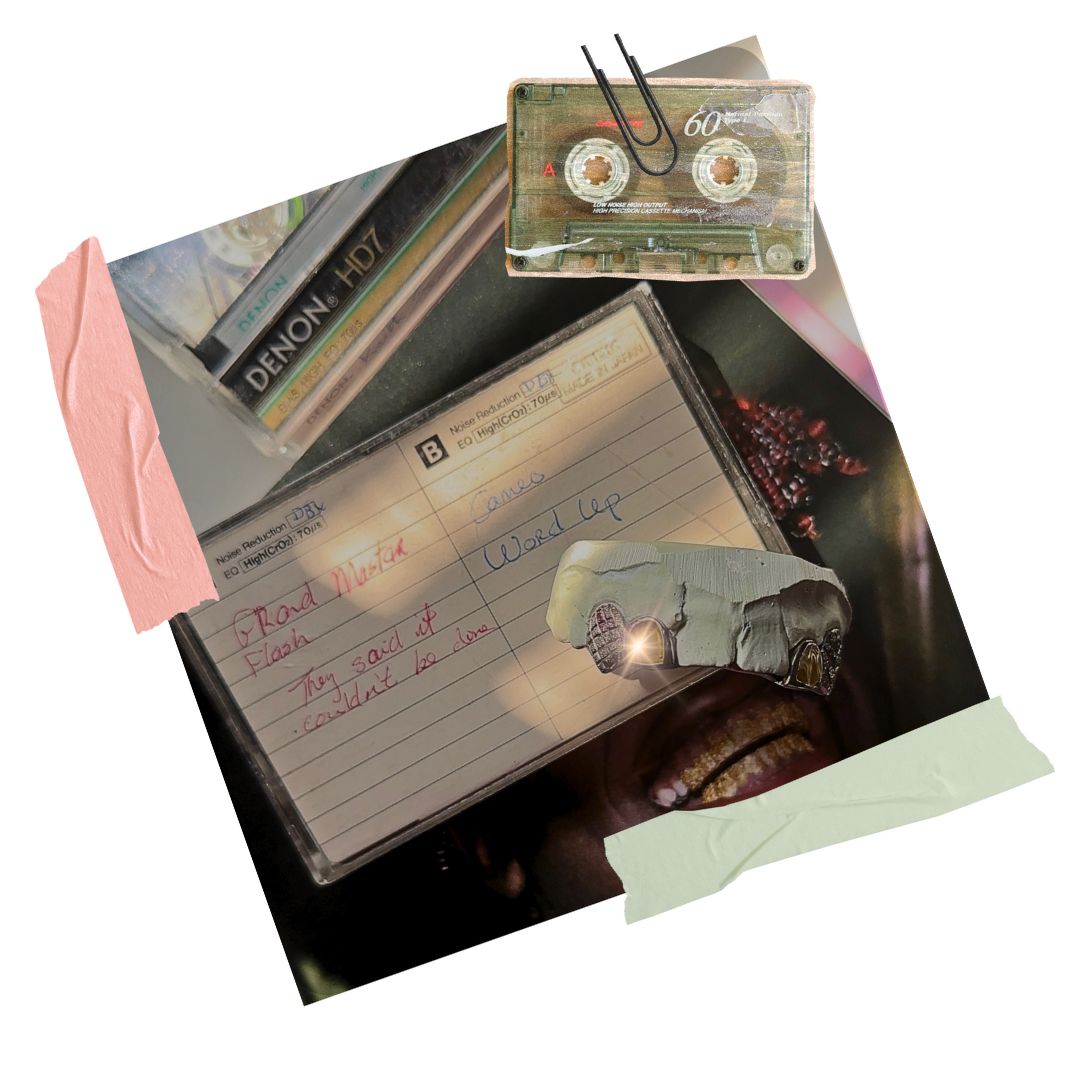
For decades, hip-hop spread like Boston Ivy along the cold hard face of 1520 Sedgwick Avenue, where Campbell grew up, into literature, fashion, and film. Hip-hop was MCs, DJs, break dancing, beatboxing, and more. This staple of broad American culture founded by Campbell has always drawn from the souls and sounds of Black history, and can be heard today among the rooftops in the gentrifying neighborhood of its birth.
The classic film “Brown Sugar” mirrors the duality and divergence in hip-hop, and yet is comforting to me every time – like the velvet kiss of smoked sweet sandalwood tickling the air, swaying in rhythm to Mos Def’s title track, enveloping and spinning me like a rimmed-out, based-up Box Chevy bumping down a Hotlanta strip.
This was a film about young love between two best friends and their discovery of hip-hop on a New York street corner. Since its release more than 20 years ago, other media like Stan Lathan’s “Beat Street” and Erykah Badu’s “Love of my Life” have paid homage.
I fell in love with hip-hop when I first heard Common’s impassioned cadence on “I Used to Love H.E.R,” or listening to Lauryn Hill’s melodic voice intertwine with the poetic lyrics of the Fugees’ “Ready or Not.” Every verse was so artistic it could accompany a Picasso.
Or maybe I fell in love with hip-hop when I felt the vibrations of the lunch table in middle school as kids freestyled about how much we wanted to go home.
“These were the kids that had an attitude about themselves.
Hip-Hop is coming from within us; we were never not Hip-Hop.
We were always this, from the time we were born. We were always this.”
KRS-One (PBS)
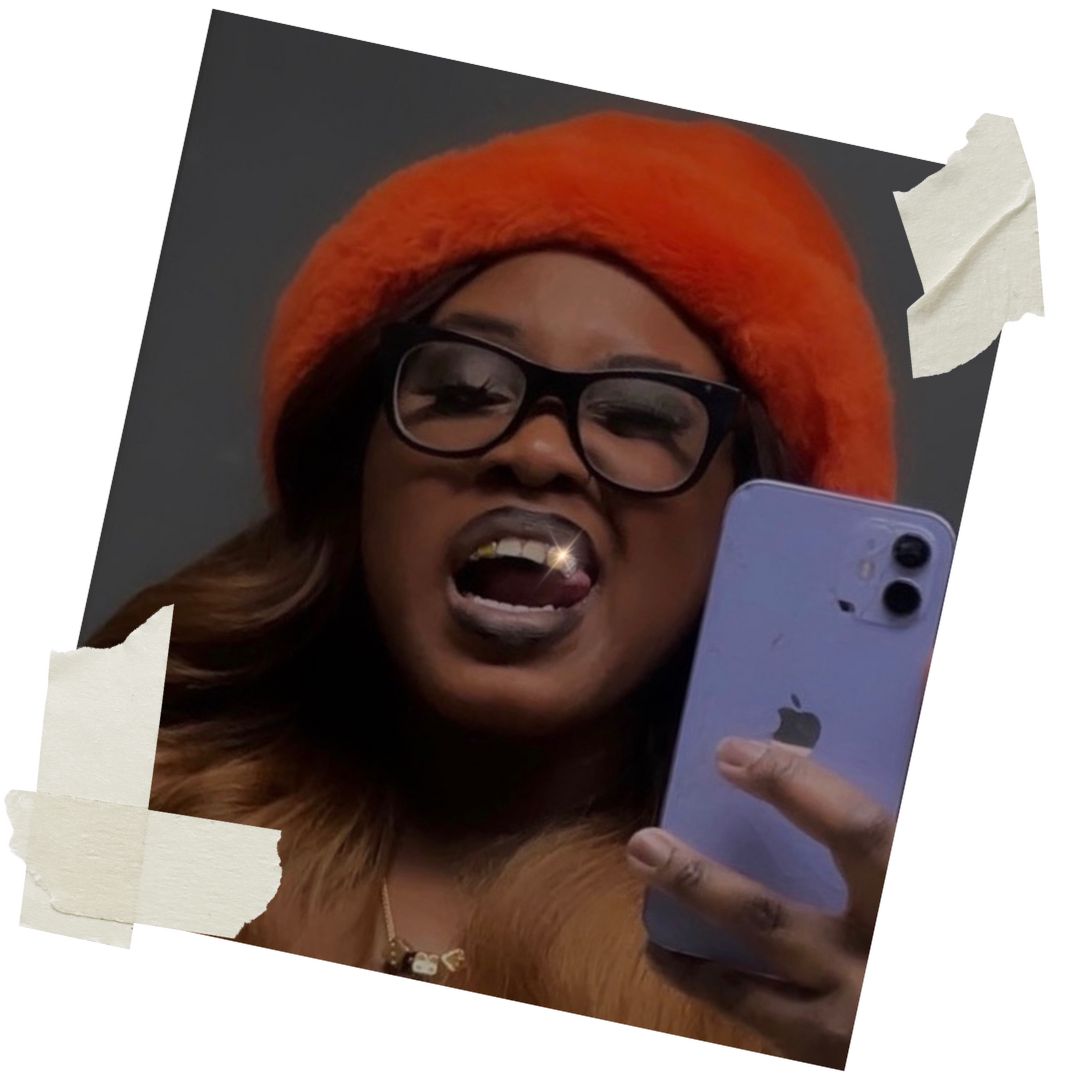
I fell in love with hip-hop in the way colorful strokes of spray paint on bleak brick mesmerizes me. Something even made me love hip-hop enough to buy my first grill.
Immersed in these songs, I’d often feel a kind of cultural baptism – cleansed of the world, and each time I’d wonder what it was about 4/4 signature time beats, synthesizers, drum machines, and live bands that makes me feel so new.
Hip-hop is a revolution and a lifestyle. It’s not bound by time. It doesn’t ask permission or wait to be invited. Hip-hop has no face, yet is recognized everywhere.
I fell in love with hip-hop when I realized I could hear its voice.
Growing Up Hip-Hop
Do you ever wonder why hip-hop is so loud, why the bass shakes every ounce of blood coursing through your veins? It’s the voices of young Black creatives who mean to be heard. This culture I love was created among destruction for a way of escape from an abyss of assimilation and to drown out the cries of a country in ruin.
The hip-hop of my memories was legendary. It has raised generations. So present and resonant, and so resounding, it speaks at every street corner in blue hair extensions, green fur coats, and heavy twisted ropes of gold. As the decades spin on, I still reach for Wu-Tang or Fugees on vinyl before anything new.
Hip-hop has authored a story that is still being written, but has already changed us so much.
In the beginning, rap was authentic: words, experiences, and the instinct to create a story through poetry, desperation, and determination. Through hip-hop’s adolescent years, daring choices formed icons, controversy was more of a message than a moment, and passion overflowed in music, making more sense than cents.
Lil’ Kim made matching minks with vibrant wigs iconic as she stunted down Chanel runways, Missy Elliott’s is credited today by artists like Flo Milli for her patent leather wonderland, and the enterprising Queen Latifah sent out the still timely and unanswered call for “U.N.I.T.Y.”
Being an “Influencer” was natural — not forced to create a social media following, but in the early ‘00s, Shiny suits and Blackberrys replaced oversized jerseys, pagers, and hard-hitting lyrics. Hip-hop experienced a shift that valued profit over community, and the genre went mainstream.
Cultivating One Organic Culture
Now we’re in the age of bite-sized consumerism. The industry is more invested in turning hits and virally trending with a TikTok song, and less invested in nurturing the creative impulse. There’s no time for artists to find their own sound and voice, grow their presence, or make mistakes. Patience is no longer a virtue, and the attention span shrinks with every social media scroll.
In a streaming service paradise, catchy lyrics keep the lights on, but the artistry of hip-hop is what built and sustains the home. Recycling the same sound for profit diminishes the art, which flourished through individuality, and wanes through conformity.
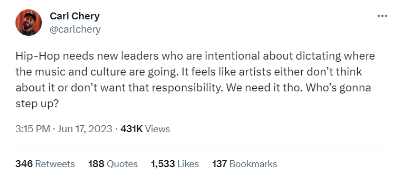
Hip-hop blossomed underground in the heat of juvenile anguish. That soil, seed, bud, and flower were organic. To preserve this rich culture for another 50 years, to nurture new life, music industry leaders should prune where the foliage has withered, and just sit with hip-hop. Learn it again and nourish it, with patience, so that it can nourish us, because hip-hop has to be organic.
Smoke of my incense dances softly to the music, rolling with credits of the film, and the buttery notes of sandalwood are swaddled inside glowing ashes where a flame once burned. There’s a reason to be hopeful.
ASHLEY TATE is a young Black poet in Birmingham, Alabama. Her work touches topics of love, race, and womanhood. On a rainy day, she retreats to a candle-lit corner of her room with her nose in a book.
CARLA BELL, Director of MAYDAY:Black, is a journalist and editorial consultant with bylines at WHYY, Ebony and Essence magazines, Electric Literature, The North Star, first established by Frederick Douglass in 1847, reestablished by Shaun King in 2019, and many others.
50th Anniversary of Hip-Hop
Resources and Events
This month, as we celebrate the golden anniversary of hip-hop, these resources and events will help us to better understand the history of this art and genre.
Books
Various titles, Hanif Abdurraqib
Book of Rhymes: The Poetics of Hip Hop, Adam Bradley
The Tao of Wu, RZA
Decoded, Jay-Z and Dream Hampton
“Ode to Hip-Hop: 50 Albums That Define 50 Years of Trailblazing Music,” by Kiana Fitzgerald
Series
Oakland Museum of California, honoring the 50th anniversary of Hip-Hop culture.
Friday nights throughout August
Events
“Birth of a Culture” Grandmaster Flash and Friends
Crotona Park, Bronx Aug 4 (5-9 PM)
Lincoln Center Hip-Hop Week
NYC Aug 9 – 12
Hip-Hop 50 Live at Yankee Stadium
Bronx Aug 11
BRIC Hip-Hop Anniversary Weekend
Prospect Park, Brooklyn Aug 11 – 12
2023 Hip-Hop 50 Summit
Hip-Hop Forever at Madison Square Garden
NYC Sep 15
Exhibits
“Hip-Hop at 50 by Janette Beckman”
NYC Photoville Festival; photography exhibit thru October 31, 2023
Other Resources
