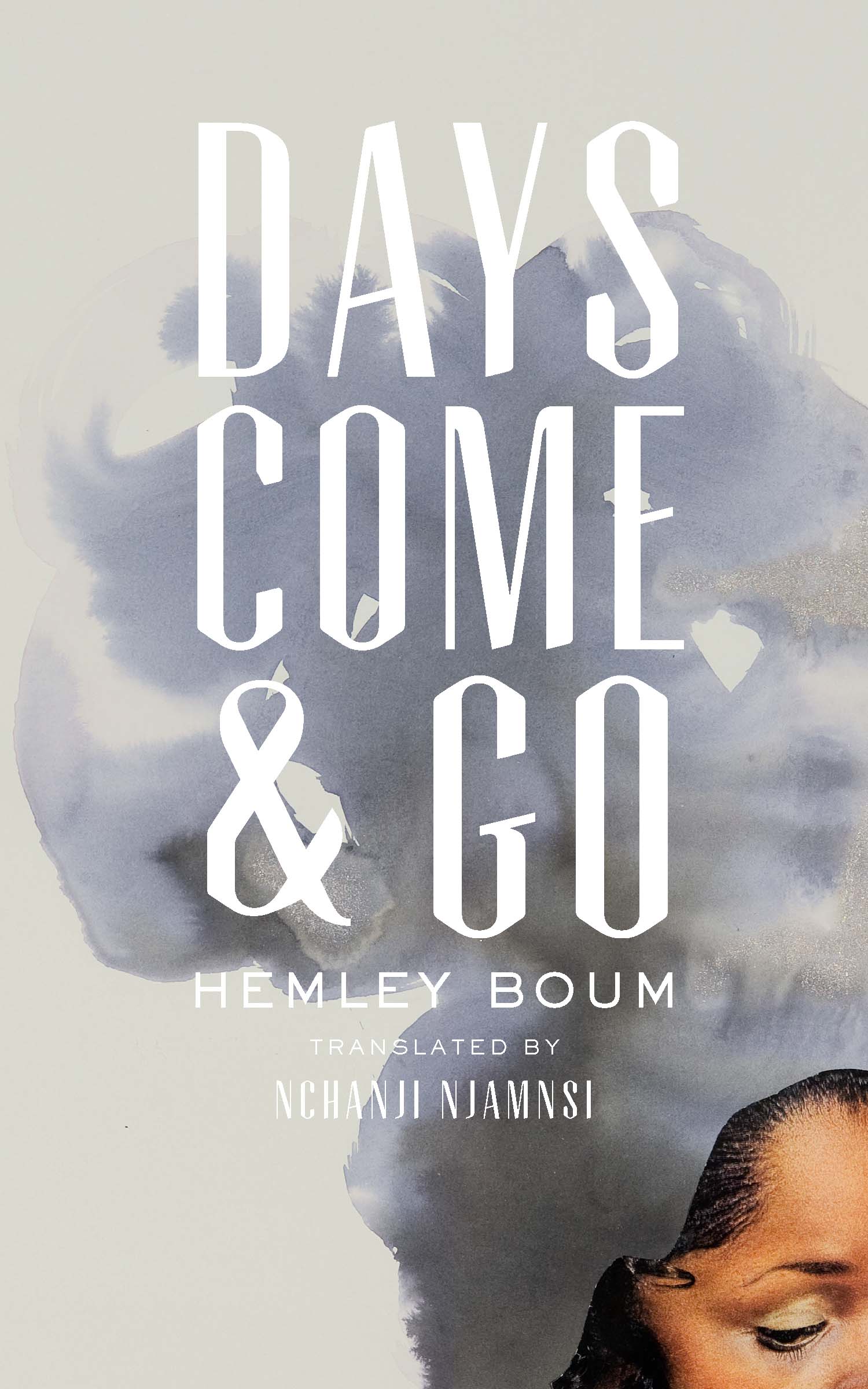
This is the vividly told story of three generations of women (and their husbands, friends, sons, and lovers—not necessarily in order of importance) both in Cameroon and after immigrating to France. Major personal and historical events, such as Cameroon’s war of independence, are told through the eyes of one character, whose circumstances provide the background of what is happening in Cameroon—and sometimes in France or in the rest of the world—without it becoming a history lesson, but just enough to imprint on the reader in what kind of world these people live and how it influences what they do.
The novel’s first part is reserved for Anna, who was born in Cameroon and whose former husband is a Cameroonian politician. At the end of her treatment for breast cancer, she is spending her final days in Paris. With her daughter Abi tending to her, she tells her life story, beginning with how she was raised by her grandmother in a remote village and went to an all-girls convent school where, thanks to being the reverend sister’s pet, she became acquainted with European culture, colonial overreach, and Catholic doctrine. The clashes that this causes in her own reactions and in the traditional village are rendered in colorful scenes. Due also to the special attention showered upon the talented girl, Anna is a candidate for sponsored university training abroad, but instead she meets Louis, a brilliant young diplomat. The two enjoy long conversations. After some hesitation on the part of Louis because of their difference in status, they decide to marry after Anna gets pregnant on their first romantic date. The continuing story of how Louis sacrifices his ideals during their marriage for the amassment of material wealth, obtained by pilfering the underperforming country’s resources while rising in the governmental ranks, is sad to read. While Anna mourns what has happened to the old Louis and is less amenable to showing up at corrupt political gatherings, the revelation that an opulent second house he has built is designated for his mistress blows up the relationship. She leaves, and the young new wife will go on to bear Louis a train of offspring. In later years, when Anna tells her daughter all this, Boum stresses several times that the relationship with Louis has since been patched up, and also the relationship with his daughter has been solid. Throughout the novel, we meet more than one male character who is less consistent in their relationships (such as Louis’s own father), but they do have their saving points.
Then follows a relatively shorter episode about Abi, Anna’s daughter. Abi grows up in Paris, and loses her white husband after he discovers her affair with a Black artist. This is a fascinating part of the story, and reading it, even before reaching the halfway point in the book, I was wondering where we could go from there. In what could loosely be called the third part of the novel (despite returning to Anna’s and Abi’s stories every so often), we follow the story of Anna’s grandson, Max, who is mixed-race. Spending his summer holidays in Cameroon is supposed to help him cope with his parents’ divorce, as well as reconnect to his heritage.
In Cameroon, Max also finds his three friends. One of them, the attractive and intelligent Tina, will carry the story forward. Unfortunately, in this part of the book, there are some overlaps, so that we read the same incidents twice. I’m sure it would have been redeemed with further editing. However, the story remains engaging enough. Max develops a crush on Tina. Like Anna, Tina is not brought up by her mother, surely another theme Boum wanted to address in her novel, perhaps as a kind of symptom of and a metaphor for a lack of stability in Cameroon. Traditions are shifting when Muslim dominance spreads southward from the north of the country where Muslim herds-people traditionally hold sway. Ismaël’s brother, the other boy in Max’s circle, begins attending prayers in the mosque. The brand of Islam that is preached there is the extremist one calling for ultra-traditionalist conservatism on the one hand and ruthless violence against infidels that we know all too well from its terrorism in different places around the globe. Jenny, another member of Max’s circle, is the next person to convert, which occurs when Max goes back to school in Paris after the summer. Jenny (now in a burka and studying the Koran) and Ismaël become lovers. Jenny is recruited, on misleading promises, into a military camp of the Boko Haram terrorist organization, and out of love and in the false hope they can protect Jenny, Ismaël joins her, followed by Tina. Without giving away any spoilers, it’s riveting to read how Tina’s handles being one of the mistresses of the camp commander. He, like many men before him in Tina’s short life, are attracted to her light skin color. Inevitably, the emotions in this part of the book are extreme due to the gruesome situations being related to the reader. Even if we’ve delved into the news and politics concerning extremist groups, life within such an organization can be a little hard to relate to. The ending of the book, though searing and tragic, brings us back to the overriding importance of sharing our humanity.
One major message in the novel, and which Boum says was the impetus for writing it, is to show the unfairness of how we in the West mourn only “our own” victims in a terror attack. The whole world knows about the attack on Charlie Hebdo, but a similar vicious and deadly attack one week later in Cameroon remained largely unknown. “In places the West considers to be the center of the world, every death is worth a little more. (…) We are all survivors in this country [Cameroon].” That is undoubtedly true. Just the same, Boko Haram made plenty of headlines as well. If we can read more literature or can acquaint ourselves with more artists from Cameroon and other marginalized nations on a regular basis, there’s an eventual possibility that the balance can be reset.
In a Zoom presentation organized by her publisher, I picked up a fascinating anecdote about how Boum acquired the first part in her pen name. In Bassa, a language of Cameroon, “Hemle” means pride and hope. Boum wanted to name her child Hemle, or Hemley with the additional y because otherwise the ending in French would be pronounced with an “uh” sound rather than the desired “ey.” When she had two daughters, and using the name Hemley apparently wasn’t an option, she just kept it for herself. (She doesn’t want her real name to be revealed.)
Cameroonian translator Nchanji Njamnsi has done a fabulous job with Hemley’s supple prose. Most of the book is a real page-turner, and it didn’t read like a translation at all. Only the setting in Paris reminds us that this is a story of Francophone people (African languages and English are spoken in Cameroon, too). Days Come and Go received the Amadou Kourouma Prize. Boum’s earlier novel Les Maquisards, as yet untranslated into English, was awarded the Grand prix litteraire de l’Afrique noir.
Days Come & Go is published by Two Lines Press.
JACQUELINE SCHAALJE has published poetry and short fiction, most recently in The Comstock Review, The Friday Poem, and Pembroke Magazine. She’s the winner of the Florida Review Editor’s Prize 2022, and was a finalist in a few competitions, among which Live Canon’s and Alpine Fellowship. She participated in the Fall 2022 W2W mentoring program of AWP. She is a translation editor at MAYDAY, and reviews books for Painted, spoken, too. She earned her MA in English from the University of Amsterdam.
