From between the brows of low rolling hills we have
Awakened, from within the liquid gaze of the fog
Awakened. It’s now the end of spring
March, amidst a splendid attire of green, too
Awakened. Sunlight strolls through yearning acacias
Offering our peeping heads a sheer yellow
And a smile. We are a people of green
For two, three hundred years we’ve stood on the brown of earth
Brewing a redolent richness and fragrance
Same as sunlight, the same shade of yellow
We are from the south, for three hundred years we have
Stood on this island, in accord with the seasons and climes
Assumed different tints, and now before the rain
We’ve awakened, from between the brows of low rolling hills
Awakened, from within the liquid gaze of the fog
Crying out: Tea, by nature, seeks the sun
—⸹—
穀雨
我們從丘陵的眉間
醒過來,從霧的眼波裡
醒過來。這時已是暮春
三月,也在綠的盛粧中
醒過來。陽光行過相思林
給探頭的我們以澄黃
以及微笑。我們是綠的族群
二三百年來就站在褐的土地
蘊釀同陽光一樣,一樣黃澄
撲鼻的甘醇與芳香
來自南方的我們,三百年來
站在這島上,因四時節氣
有不同的色澤,如今在雨前
我們醒過來,從丘陵的眉間
醒過來,從霧的眼波裡
大聲叫著:茶,性喜向陽
—⸹—
Translation notes: The Scents & Colors of Home: “Guyu”
The first poet to write in Taiwanese after World War II, Xiang Yang published Taiwanese poetry during a period of martial law, when the Kuomintang (KMT) implemented a monolingual policy and languages other than Mandarin were labeled mere “dialects,” deemed unpatriotic, and faced discrimination in educational institutions. His poetry draws inspiration from his surroundings and his home, and on the whole he wrote works that speak of and to the Taiwan experience. Some of his poems are lyrical, evoking the charms of rural Taiwanese landscapes; others comment on Taiwan’s history, politics, and society.
In “Guyu,” Xiang Yang paints a vibrant, moving portrait of the land and people of Taiwan, his being a palette of both the natural characteristics of the land and the cultural history of its peoples. Color words are especially prominent throughout the poem, with green, yellow, and brown forming the primary scheme—the foliage, the sun, the earth, together framing the landscape being painted. The Chinese title Guyu 穀雨 (lit. “grain rain”) is a word that refers to one of the 24 solar terms (jieqi 節氣) in a year according to the traditional Chinese lunisolar calendar. Being the sixth, guyu marks the onset of warmer temperatures and rainy weather, making it an important time in the planting of crops. In the Gregorian calendar, guyu usually lasts from around April 20 to around May 5.
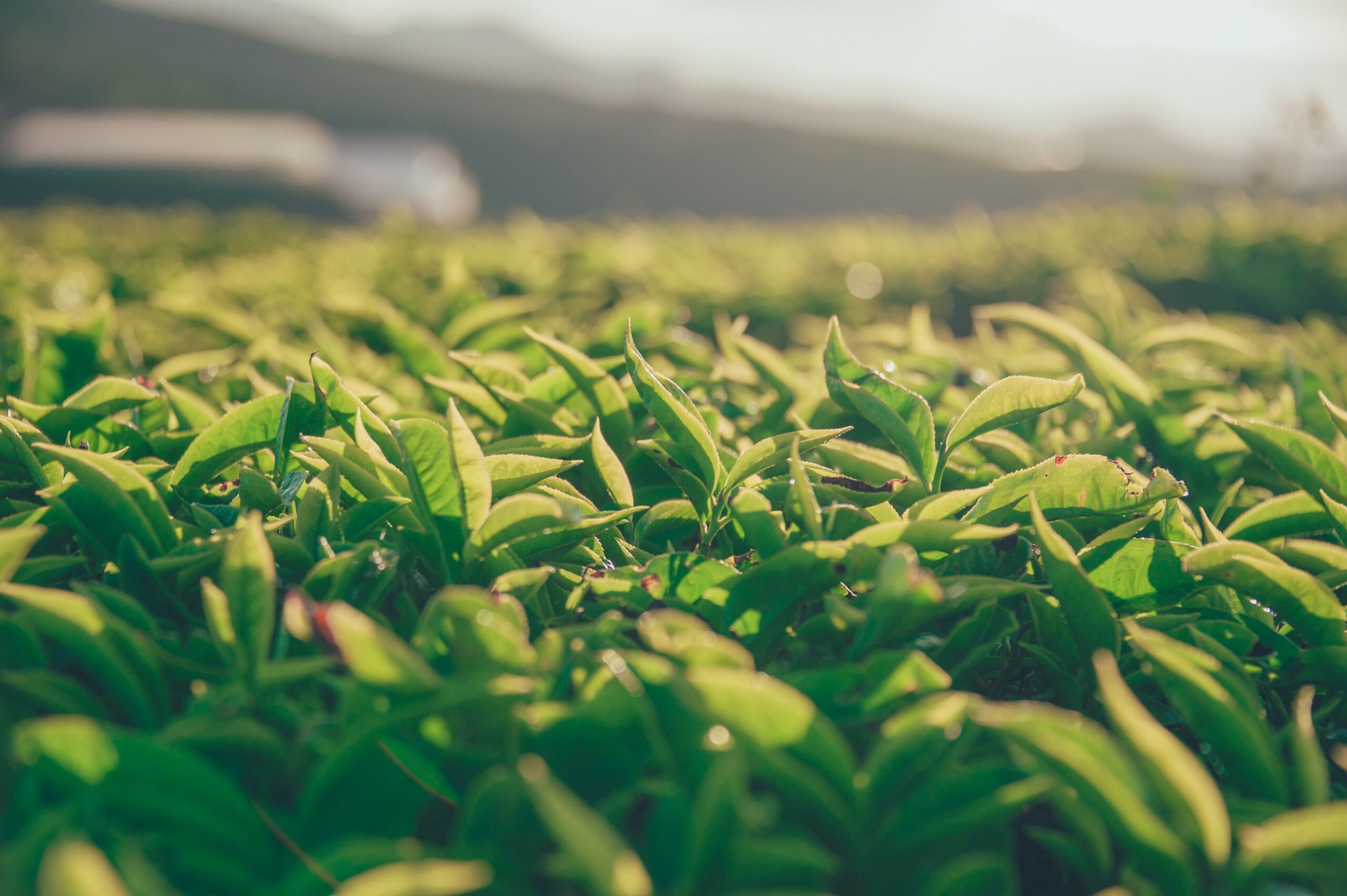
In “Guyu,” Xiang Yang compares the people living on the island of Taiwan to the tea plants that thrive there. What must be noted here is that the last two characters of the poem in Chinese, 向陽 xiang yang, are the very characters making up the poet’s name, crucially adding to the autobiographical sense present within the poem—that sense of identity and identifying, of belonging to a place, that is central to the poem’s force, built up through the almost chantlike but unobtrusive repetition worked throughout the poem and culminating in the “repurposing” of the poet’s own name.
XIANG YANG 向陽 (1955 – ) is the pen name of Lin Qiyang 林淇瀁, a writer of poetry, essays, and children’s literature, among other things. Born in Nantou County, Taiwan, Xiang Yang is “a regional poet in the best sense of the word—his poetry comments on the universal human condition without sacrificing a sense of place” (John Balcom, translator). His poetry draws inspiration from his surroundings and his home, and on the whole he wrote works that speak of and to the Taiwan experience.
Xiang Yang’s hometown, the Guangxing Village in Nantou’s Lugu Township, was located near Dong Ding, a mountain famous for the oolong tea grown there. His parents owned a tea shop specializing in Dong Ding’s tea, and he fondly recalls, “When Mother tasted the teas, the store would be filled with the scent, like the sweet fragrance of blooming flowers rushing at the nose. The golden brew would be poured from the narrow spout into the cup, a golden spring flowing into a valley” (“十行土地吟哦獨行─謳歌台灣情愛的向陽,” 郭麗娟). And it was because tea leaves love the sun, because Lugu seemed always bathed in golden sunlight, that he later ended up with the pen name Xiang Yang 向陽—“seeking the sun.”
PINYU (PEARL) HWANG graduated from Yale University in 2023 with a double major in computer science and linguistics. She grew up in Taiwan with a childhood spent alongside night market pinball machines, scooter-congested streets, and 7-11s around every corner. She loves to ponder the presentation of information—digitally, visually, linguistically—and is particularly fascinated by the ways language becomes art. She has published translations of works by contemporary Taiwanese writers such as Su Shao-Lien, Ping Lu, and Song Shang-Wei, and is drawn especially to language unconventional in some aspect—whether it be linguistically, metaphorically, or presentationally. Being Taiwanese and American, she holds a passion to share cultural artifacts of Taiwan with the English-speaking world, and as a linguistics student, language—and in particular, its intricate mechanisms and constant innovations—is very often both the medium by which she hopes to do so, and the very artifact she wishes to showcase.
