
The Story of the God-Writer and Minotaur¹
Everyone as everyone, I as you, you as him, he as someone else and someone else as…and just like this we continue to go around in circles for a long while, not thinking about the beginning of this road. What do we think of? Of the fact that we look to ourselves apathetically, to our fate and to the 14 years he spent in this place.
By a long while I mean exactly here where he gets cold, sings, rests, mumbles, and many other things. At one of these moments, you saw him from the window of your room; how he was gazing at the stars and laughing, the very stars whose numbers are as infinite as those of writers.
It was the summer of his fourteenth year… –
Perhaps we only began to realize how desperate we had been after the beginning and didn’t suspect that everything we had read was the product of the fevered imagination of an obsequious writer who gathered bits and pieces of his protagonist here and there to have his creation brave a new challenge. And yet whenever faced with a minor hurdle, he would cowardly scratch his head and retrace his step back to the first line, tagging us along with him. As we look up, we can see that Ariadne has let go of the thread, leaving Theseus with Minotaur to wander around in the labyrinth for good.
[Now it’s been nine long years…]
When the thread was severed, we were there, at that place which had been to me or maybe to you too as frightening and eerie as all other places. As such, I have the impression that I resemble the man who, on an inauspicious afternoon, gets into a taxi with a bearded man who keeps pushing him, “write about you and me,” but who instead notes,
I only write about people who you may or may not know in the future. –
Yes, I agree that the place you call the beginning is the best place for absolution, for me— I who, like Minotaur, measure year after year for nine years so that seven boys and girls may come and provide me with some company. Yet again, after all these years, Theseus only caught sight of a morose and gloomy man who entered the place uninvited; a man neither I knew nor he wanted to devour.
Perhaps it is outside the scope of this story and this labyrinth to know the characters, but I am confident that he too is aware of the fact that my fantasies are still far from taking on a fully independent form and are still subject to the clasps of the beginning that so befuddled us. All of this, I’m certain, is his making. Incidents confront us one after another and push us to flee like a defeated army only to claim their grounds here. But, you already know that when the time for “not every writer is a writer” comes, he’ll gladly confide my fantasies to a fiery burst of laughter and release them from the crag of time. Then you’ll see him fixing his gaze on a faraway place, either the past, the future, or somewhere in between.
[With his head hung low, Minotaur couldn’t understand why he had chosen that place to be his home; the longer he entertained this idea, the more attached he became. On the wings of this fantasy, he would soar away, only to appear in the labyrinth again…]
The god-writer had a similar fate! –
He speculates that perhaps this writer, this you, this Theseus, all mock and play jokes on him, especially in the beginning of the beginning. So, he is right to sulk, turn his back on us, and ruminate about what he could do with the one who is unable to make out his fantasies.
As we reflect on it, we begin to understand which blocks of fate we share— the very fate whose time, with its high brick walls, has encircled us in such a way that, were one to try to walk past them and press his head against them, he would only be able to see his reflection. And yet, what we perceive instead is the image of a morose and gloomy man, short in stature, with a noseless face and hundreds of long crooked front teeth, hiding his spectacles behind his horns and ruminating the days when the demons would surge through our veins like green afflictions. Perhaps that’s why he cracks a smile and waves at the observers as if to say,
This is everyone’s fate. –
Perhaps you were the one who thought in my stead:
Fantasy fights its way through. –
In that case, as you think— as we think— fate is nothing more than a number of pointless letters that stifle us all, and there is no one to ask about the severed thread.
However, the demons and the green afflictions are not merely unrealized fantasies to avoid thinking about. I reassure myself fearlessly that our fears won’t haunt us and we won’t end up like them…
No god aspires to follow in Theseus’s footsteps! –
But he will follow, that much I am certain; otherwise, he will waver, which goes against his godliness.
[Inside the labyrinth, a stranger asked, “Once you came here did you stop to think that you’re always thinking?” Theseus, who was hunched over the Minotaur and gnawing on his bones like a beast, kept his quiet. He had done his part. It was Ariadne’s turn now to scour the place for a severed thread and possibly in her Q&A two other gods could be born, two radiant infants.]
“When we are born, we cry that we are come to this great stage of fools.” You might or might not be familiar with this passage from King Lear. At any rate, it brings to mind an ingrained attachment. Thus, after giving the bearded man a cold smile, he was unsure of how to explain things to him, how to spin his tale. He was unsure of where to begin—whether to start from himself or the taxi driver’s cigarette, visible in the rear-view mirror—or whether to describe the bearded man’s countenance and tell him about a mirror wall that would delude people by their own reflections while concealing the fates of the mirrors; the very mirrors that are unable to reflect as clearly as a simple piece of glass.
[Theseus let go of the bone and lumbered his way up to the man, saying,
there was no mention of you in the beginning, so why don’t you tell me what –
Ariadne was thinking about when she severed the thread?]
The bearded man or the man in the cap is used as a preference for the identification of something unique, as a favorite character of most writers—someone who doesn’t look like anyone but is invariably a character in a story. You may say, “a preference for peace or….”
or for digression? –
No, something else, something like a mirror and a singleton. Something that could patiently mislead Theseus (or Minotaur) and erase their names entirely from all books. He would then be left alone, all by himself, patrolling like a vanguard by the house of writers and freeing them from the place known as the beginning. That’s why the writers rush to open the door for him as soon as they hear his name. The god-writers, however, are different. They follow Theseus and Ariadne till the end of time and think about them day and night. They cannot round off a story that fosters other stories. Their characters do stray from their own alleyways and wherever they go, that marks the beginning of earth. He or she is the one who gets cold, rests, mumbles, and many other things, in that place where we mentioned as the beginning, in that place where none of you asked “Why 14 years? Or why does he get cold, rest, mumble, and many other things?”
When I first laid eyes on him, I wasn’t a huge fan of short stories, nor was he a fictional character. As I bent down to retrieve the ball, I wasn’t expecting him to think that this kid would grow up to become a writer or anything like that. When I straightened up, nine years had gone by and I had already become a writer. Yet, as always, he gets cold, rests, mumbles, and many other things.
This one time, he saw me under the electricity pole and crept up on me, whispering:
Do you know who turns on this light? –
I wasn’t sure which light he was talking about. This labyrinth had been in darkness for ages.
They say it’s the mayor. You know him? –
He emphasized the mayor in such a sardonic tone that I turned back, met his gaze, and said, “Perhaps it is…”
It was as if he hadn’t heard what I said when he crawled back into a dark corner and mumbled with a heavy heart: “Be a man of Allah and have him turn it off, sleep has left me…”
Or something of that sort. I can assure you that I have never questioned the veracity of this statement or wondered if I misheard him or that he actually intended to say something different. I’ve been telling you his story many times, but each time you shake your head and say, “This line is endless, like a full circle,” as if you are deaf.
Still, I remain convinced that the stories the writers have written for him are a part of the untold tales of those people, a part of so many unnarrated narratives that, unless you listen, no one’s secret will be revealed, and you will, as always, jiggle in the beginning— the place where you and I, you and he, and he and I differ from one another.
I claim that if fate hadn’t intervened, Theseus wouldn’t have returned to the labyrinth, wouldn’t have gnawed on bones, and wouldn’t have imprisoned you and me inside mirrors. We also wouldn’t have locked horns with that man, who doesn’t resemble anyone—not them, not us, not anyone else—or anything else.
[Theseus cocked his head, peered at his body, and mumbled, perhaps out of shame,
I am hungry, …been hungry for nine years.] –
You already know that the beginning of a text is the briefest and the loneliest part of it, as well as the most beautiful and the most significant. Just as you already know he stands out from everyone else, that 14 years is the smallest price he paid in exchange for light and keeps yelling for the mayor’s help, and that perhaps he has had so many people like you and I carry his message, like you and I…
Fourteen years is the shortest amount of time to sing and not think, to get scared of light and not think, to get cold and not think, to go for a walk and not think, or to constantly wonder why I didn’t think that I could be a writer and would deliver his message to the mayor, or something of that sort.
Here, I become lost in your line and then someone reminds me that the thread has long been cut. As you well know, if the threads are not severed, they will be let go, regrown, withered… or many other damn things.
His mind drifts aimlessly as he gazes blankly at the photo of his daughter, who tragically set herself ablaze seven years prior to you and I becoming writers, tormenting him like a cancer. I’m not sure if it was because of the fire’s brightness or his daughter’s ascension. I don’t know and neither do you and certainly neither does he. Ever since, a smile has been lingering between him and the image of his daughter.
[Theseus found it harder and harder to determine who was right— Ariadne who cut the thread, the thread that was cut, or Pasiphae who…, or any of the other people in the vicinity. But you now know for sure that Minotaur is right… or Theseus.]
No one can escape a raging fire. It comes in disbelief and ends in fate. However, when it arrives, the girl kneels down, and he notices a line between her breasts trickling down her long dress and flowing toward him,
why you, darling girl? the mayor, alone, could… –
[Theseus gave him a stern look and said, “I won’t wait for anyone; I’ll go and untangle myself from the clasps of mirrors, and then you may take my position. I’ll also go and retrieve the items I gave to Ariadne. He was studying the bones when Theseus whispered to him: “You and Ariadne understand each other well, she won’t do what she did to me but it isn’t going to actually happen for another 9 years, is it?]
By the time you got here, I had already gotten as far as sketching out the character’s beard and eyeglasses. I accomplished all of this with your help so that you could share in this fate and address the reader on my behalf.
If the readers don’t want to respond, don’t, no force there.
When I got there, I couldn’t figure out how I had left the beginning and made it so far. If the shouting and yelling of the demons permit, you will realize that after the message, the beginning was no longer the beginning.
[Theseus charged at the man, yelling, “Now that you don’t talk to me, at least tell me how long until these nine years are over?]
You knew from the start that we were waiting for a hero to put the pieces together, or maybe you just don’t have what it takes to understand a hero. Now, I feel that he also understands that the beginning is no longer the beginning. Imagine the long while he spent looking for this road and not finding anyone who could understand his fate— the 14 years he spent getting cold, singing, resting, mumbling, and doing so many other things…
Yet, he didn’t realize it until it was too late, and his messengers are unwittingly rocking the electric poles, unaware that the demons are advancing in flocks closer and closer until….
Until you won’t even find a singleton? –
No, no, the singleton’s fate wall is not made of mirrors. Only in stories do the singletons perish and the writers are powerless to intervene. But so much for a compelling story and this unfortunate character! You know that his walls are the same wall, his mirrors, the same mirror, and his faces, the same face. Perhaps you are the only one who is aware of the fact that some people, including us, use his wall to measure their own walls.
[Theseus threw away Minotaur’s bone and said with twitching lips:
Aren’t you meant to be Ariadne’s messenger? She sent you to kill the Minotaur, –
didn’t she? Don’t think twice. Take him out…
The man picked up the bone and raised it in the air, then said gently:
It’s been nine years since Ariadne died… Did you not know that she burned herself, –
you poor thing?]
He says, “These types of men are ashamed in front of their children.”
You say, “No, another man was on the line, sitting next to his wife.”
I’m not sure why all of these occurrences seem to be connected to the contributor’s fate.
You need to swear to be taken seriously, otherwise, no one will believe you.
No one understands you, why are you still spinning? –
Because….because I am at a loss as to how I got here, how I became a prisoner of the beginning, and how I managed to get through it, especially when I felt like I had arrived at a unique moment—one that would gather and scatter all the moments, on that everything would or would not happen in it forever, and one that people would either realize who they are or aren’t while still living it forever.
True, we were pleased with this green moment that’s why we chose this waterfall of fate and couldn’t get a hold of ourselves until we reached inside a taxi, next to him, amidst the cigarette smoke wafting across our noses, and he kept pondering where in his tale he could fit a man with a beard donning a hat.
To this day, whenever there’s a knock on the door, I’m still filled with fear that it’s the demons coming to take me away after nine years. I understand that you’re getting frustrated, and from here on out, you leave me with the readers, with the man who, for reasons unknown, pressed himself against his shoulders and told him to,
Write about you and me! –
You may have known from the beginning that that’s how things are supposed to go and that god-writers have always been wary of this place. That’s why he raised his voice and yelled:
I knew they’d poke fun at me at some point in this text. –
[Seeing Theseus changing colors, the man lowered his hand, knelt down, and repeated,
It’s been nine years since Ariadne died…. Did you not know that she burned herself, –
you poor thing?
Theseus gave the man a hard push and tossed him at the mirror before him, smashing it into pieces.
It’s been nine years since Ariadne… nine years… nine years, what would have she –
thought? how could she?, No, you’re lying… I know you are. It’s all her trick…. Pasiphae’s and
Daedalus’s tricks…]
I always see how he gets cold, sings, rests, mumbles, and many other things…yet, I do nothing to help him.
He always sees how we spin around like a squirrel inside its loop, but he does nothing.
We always see how you promise the bearded man to only write about someone that might be known or not known, but he keeps asking:
Do you know who turns on this light? –
I don’t know, believe me, I have never known and probably will never know the answer to this question. I am sure this ignorance has once caused me some trouble, just as I am confident that writers are preoccupied with their ignorance, with those characters who patrol like a vanguard by the house of writers and free them from the place known as the beginning. So, as soon as they hear his name, the writers rush to open the door for him. It is then, and only then, that they become aware that besides their ignorance, they have nothing else to offer you.
Now, I stand right at the center of the earth… –
We all are the same, even Theseus. I’m positive that no one would dare to say otherwise, not even the readers.
Not even the god-writers –
[Catching sight of the mirrors, Theseus became astounded, grabbed a stick, and smashed them off the walls. His cheeks got scratched as the broken pieces splattered on his face. Covered in blood, he glared at the fragments of a man in the broken mirrors and shook his head,
The prospect of Ariadne’s return was the only thing that gave me joy during these –
nine years. I was sure that she’d return with a cute little baby one of these days and send back
what I had given her for safekeeping. Alas, Ariadne. Alas for nine years of waiting…
The man stroked his beard and said with a cold smile:
Not nine years…9000 long years…] –
Now, I see, clearer than ever, how he gets cold, sings, rests, mumbles, and many other things…
But this time, he is on his feet, staring at the window of my room, as if he has discovered the source of the light, in my room. Just like the demons that would one day surge through our veins with their short statures, noseless faces, and hundreds of long, crooked front teeth, a diabolical smile nibbles on his cracked lips—a smile that before killing of the lights reminded me of a forgotten promise whose fulfillment is difficult to achieve and is resistant to all forms of light.
No longer am I able to do anything, not for you, not for Theseus, not for anyone else, and not for a beginning that made me forget you. I’m sorry for having forgotten you for so long. I don’t know why I have trusted a squirrel with my fate that spins me around inside the loop. You may not believe me but I am at my wits’ end. It’s not just me, I am sure all writers are like this; None of them intended to feel ashamed of their characters, but they did.
No god desires for their uncreated creations to stay idle and become like Ariadne, Theseus, or an ordinary hat man such as you and me who dreams of being written about. Yet, they only write about someone who perhaps….
Do you know why you write? –
I didn’t know, believe me. Not only did I not know, but you also came unaware carrying the beginning on your shoulders. You too who drew this loop.
[Theseus was in search of an intact mirror among the fragments so that he could catch a glimpse of his own reflection, yet all he saw was the Minotaur’s. When he was about to approach the man, he noticed his own reflection in the man’s look. So he briskly got up and threw himself at his feet, saying,
Woe to me Theseus that I’ve been waiting for you for 9000 years, Do you think it’s a –
short while?]
I feel as if I am too weary to continue this story. I need to either wrap it up or perhaps, if possible, look at it from a different angle. Perhaps the demons haven’t reached the flue of my heart yet. Be at ease for now, no longer will I tell you about the beginning because he’s been fixing his gaze on my window, on me, from where he stands in his nest. I know too well what he is about. He wants me to kill the light for him. You too know well that this is neither a dream nor a fantasy but rather a binding promise that can’t be broken.
As you killed the light, a fiery burst of laughter echoed in the alley, and I, shaking with fear— a fear that I feared I wouldn’t fear— crept under my blanket. But I wasn’t the only one, you too were afraid, don’t deny it, we all were, even the god-writers. Oh, do you still remember the story of the god-writer, André Breton, who sought to create a bull but created a buffalo instead?
————————————————
¹* In Greek mythology, the Minotaur is a mythical creature portrayed with the head and tail of
a bull and the body of a man. It was the offspring of Pasiphae, the wife of Minos, and a snow-
white bull sent to Minos by the god Poseidon for sacrifice. Minos, instead of sacrificing it, kept it
alive; Poseidon as a punishment made Pasiphae fall in love with it. Her child by the bull was shut
up in the Labyrinth created for Minos by Daedalus. A son of Minos, Androgeos, was later killed by
the Athenians; to avenge his death, Minos demanded that seven Athenian youths and seven
maidens should be sent every ninth year to be devoured by the Minotaur. When the third time of
sacrifice came, the Athenian hero Theseus volunteered to go and with Ariadne's assistance—the
daughter of Minos and Pasiphae—he killed the monster and used the ball of thread she gave him
to find his way out of the labyrinth.
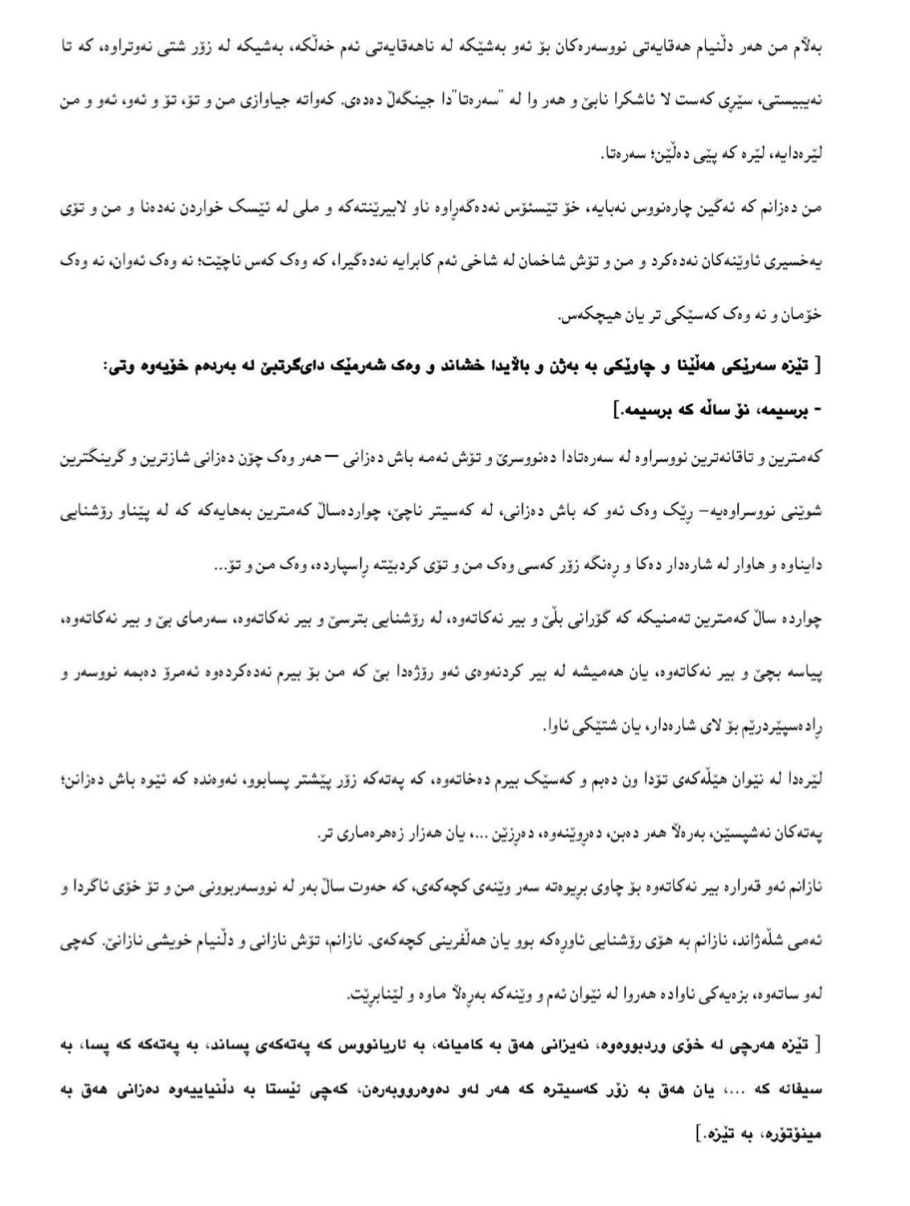
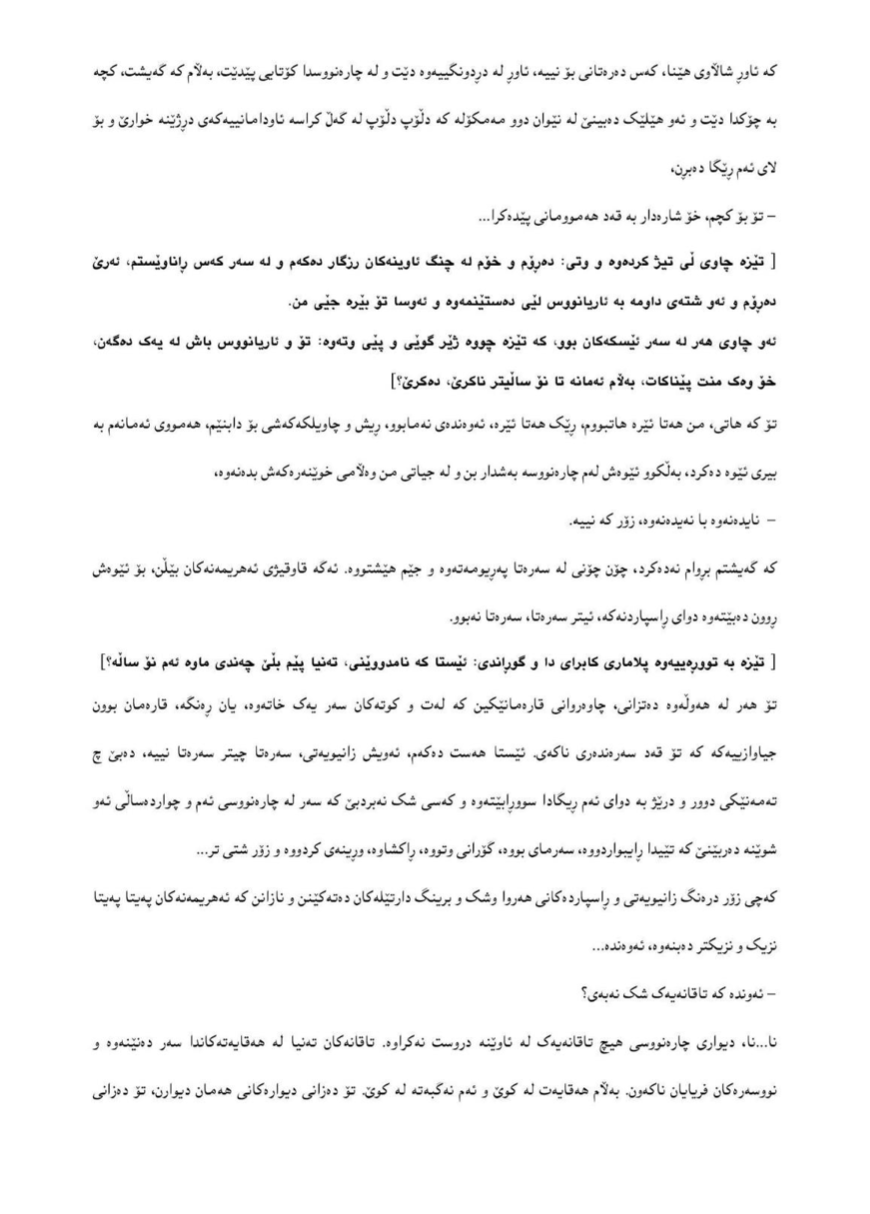
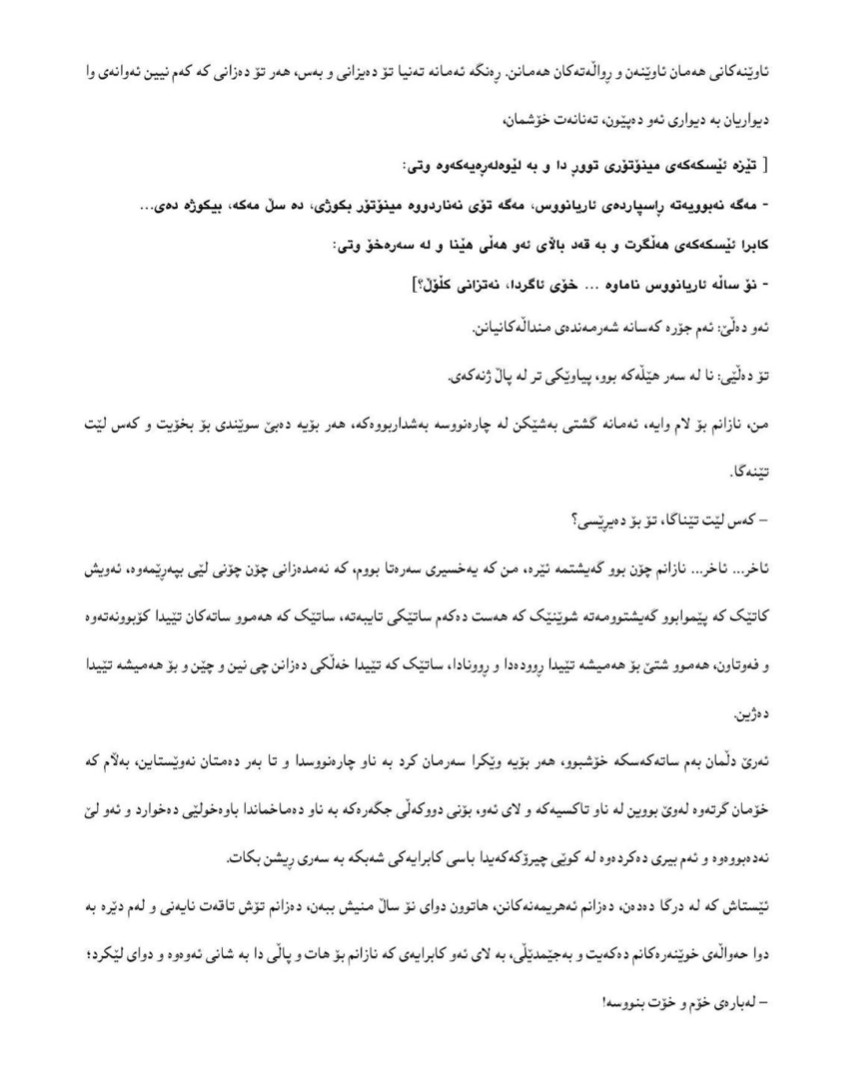

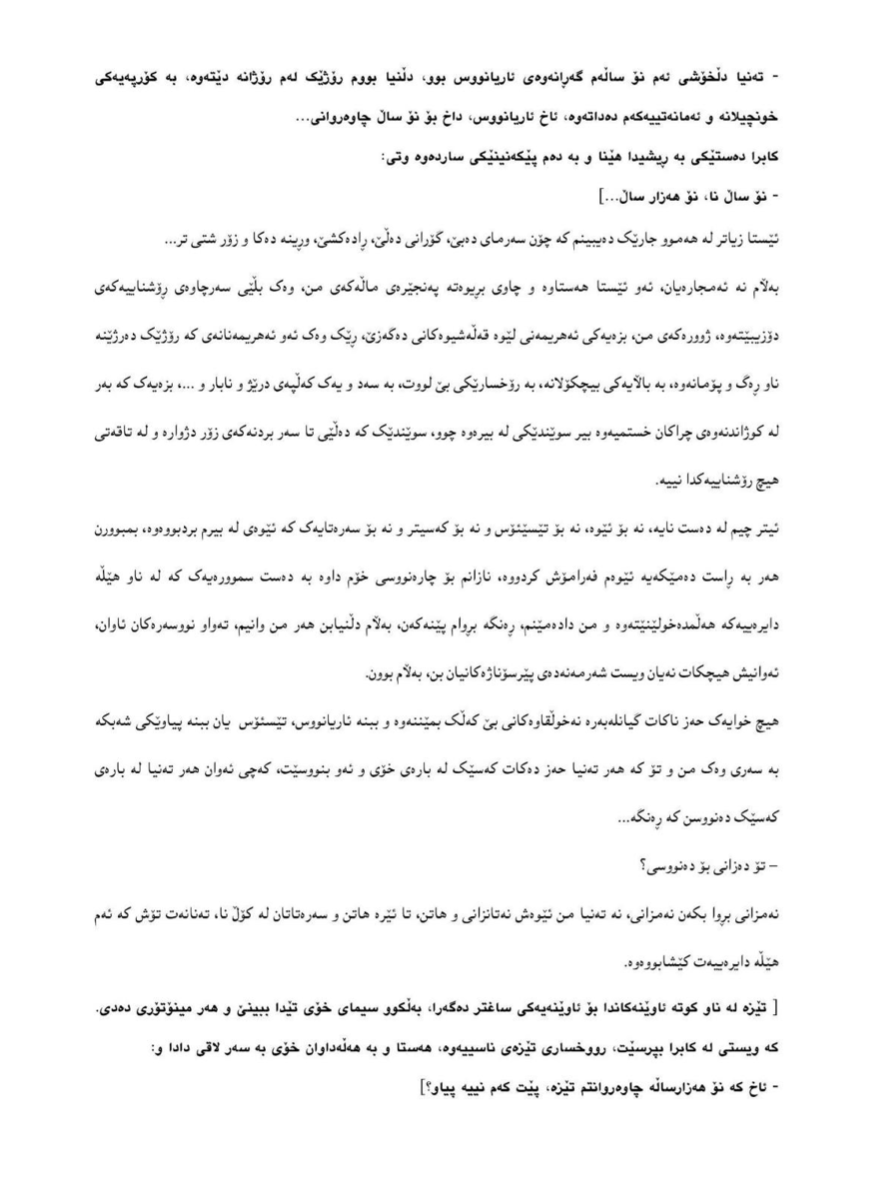
AMJAD GHOLAMI, a Kurdish-Iranian literary theorist, writer, journalist and socialist and writer, was born in August, 1980. He holds M.A in Sociology from Kurdistan University and both his short stories and articles have received prestigious awards in Iran and Iraq. The current piece, “The Story of the God-Writer and Minotaur,” took the second place in Kaval Literary Festival in Erbil, Iraq. Gholami serves as the editor, director, and writer for several Kurdish weekly publications, including Sirwan, Chru, Zhilwan, and Kurdistan Culture, among others. His most recent book, Geranawe Karasat la Sinamay Kurdida (Narrating Disaster in Kurdish Cinema), was published in 2022.
HIMAN HEIDARI is a translator and literary enthusiast from Iran. He holds M.A in English Literature and has published his short stories, poems, pieces of translation, and articles in the Literary Hatchet, MAYDAY Magazine, Los Angles Review, and The Journal of Victorian Culture, among others.
