
This interview has been edited for brevity and clarity.
Doug Cockle is an accomplished video game voice actor, but of all his work, he’s most famous for one gruff voice: the rugged Witcher Geralt of Rivia in The Witcher CD Projekt Red video games that act as sequels to Andrzej Sapkowski’s The Witcher books. Although Netflix’s own The Witcher adaptation does not follow the video games, they still informed the series — Henry Cavill, who plays Geralt in the show, cited Cockle’s gruff portrayal as an inspiration.
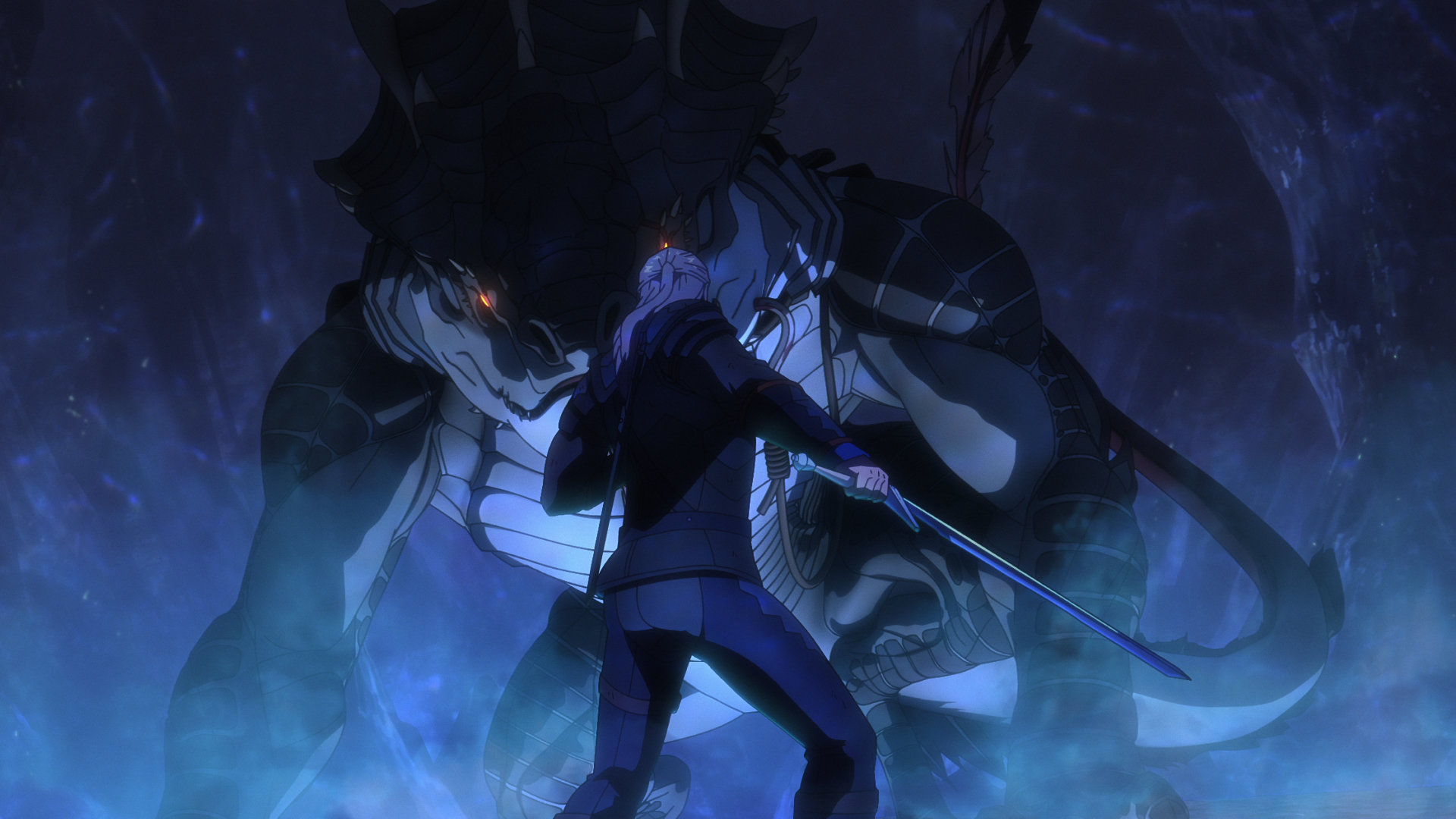
So it was a pleasant surprise for The Witcher video game acolytes when Cockle returned to his voice role as the leathery Geralt in the Netflix animated film The Witcher: Sirens of the Deep. The South Korea-based Studio Mir animated the movie, a follow-up to the studio’s first Witcher-focused collaboration with Netflix, The Witcher: Nightmare of the Wolf. Written by Mike Ostrowski and Rae Benjamin, Sirens of the Deep reimagines Sapkowski’s short story “A Little Sacrifice.”
I spoke with Cockle on the odyssey of evolving into the role of Geralt, voicing alongside two different Jaskiers, and achieving merspeak.
Caroline Cao: Did you ever anticipate you would be reprising Geralt in animation, outside of the video games? Did you ever dream about it?
Doug Cockle: No, no, it never occurred to me. So when I was asked it was a very big surprise, a pleasant surprise. I’ve been thrilled to be part of this project from the very beginning.
CC: Is there a distinction between performing Geralt in video games or Geralt in an animated movie?
DC: Not really? No, it’s the same character. I didn’t have to, and I wasn’t asked to change anything in terms of how he was performed. The only difference was little technicalities, with doing the ADR work for the efforts, that was a little bit different from in the games. In the games, you do the efforts separately, like the grunts, the attacks, being hit, and the running, all that stuff you do, all that separately from the animation most of the time, and in Sirens of the Deep I was brought into to do the ADR work, so I was able to perform a lot of those efforts to the animation, which was really fun. And I’ve done ADR before, so that wasn’t new, but I hadn’t done it with Geralt, so that was a really fun part of this project that was different from the games.
CC: As someone who hasn’t played the video games, what is like when you started out as Geralt in the video games?
DC: It was interesting because the voice that they wanted when we started recording Witcher 1 was very, very low in my register. It was really difficult for me to achieve it, and I did achieve it. But I think anybody who’s played the games from the first Witcher right through to the final DLC will recognize that my voice changed throughout as well, partly because I got older and I stopped smoking between Witcher 1 and Witcher 2, but also because my voice became accustomed to that character voice, and it became easier for me to do so I could go a little bit deeper into it. I could last longer with it.
I didn’t know anything about Geralt when we first started recording Witcher. The books hadn’t been printed in English yet, so I didn’t have that resource. I hadn’t seen the Polish TV shows. I didn’t even know about them. So I had to rely on developers from CD Projekt Red to tell me about this character and the world he lives in. I got to see some concept art and things like that that were really helpful. But yeah, overall, it was a whole new world to me. And I’ll tell you what, Caroline, it’s been really exciting to be on the journey with him, because I’ve been recording Geralt’s voice for the games at least since 2005.

CC: How does it feel to bounce off Joey Batey’s recording?
DC: Joey is such a great performer. He’s got fantastic energy, and he brings just a really lovely lightness to Jaskier. So Joey had already recorded when I started recording Geralt for the anime, so I was able to work with him. I had the benefit of his recordings being done first, so it was great fun. But I recorded in isolation, like most people do for anime, so I didn’t get to record with him. I wish I did. It would have been really good fun.
CC: Is there something distinct when you bounce off Joey versus John Schwab, the voice of Dandelion (Jaskier) in the games?
DC: Yes and no — they both bring a similar kind of energy, although John Schwab is a very different person from Joey. I don’t know Joey very well. I’ve only met him once, very, very briefly. John Schwab, however, I know quite well. We’re friends, so I suppose the main difference is that when I’ve recorded with Dandelion in the past, I picture John’s face because I can’t help it, because it’s the way he performs. Dandelion is very, very John Schwab, and he’d love it if I said that. He’d love hearing me say that. Joey, I don’t know as well. So I actually pictured the anime Jaskier in my head when I was recording for the anime. So that was a little bit different. But they’re both fantastic performers, and I loved recording opposite both of them.
CC: You mentioned in one interview you really had to practice the Merspeak. How did you achieve that?
DC: Well, the Merspeak. The words themselves weren’t that difficult, because they sent me phonetic spellings of all the words. The Merpeople speak in a very sing-songy fashion. It’s very musical, and Geralt is not very musical. So the hard part of doing the Merspeak was trying to get that sense of the musicality of language into Geralt’s monotone delivery.
It was a real challenge. And I remember being frustrated, but it was a good frustration. It was, “Oh, my goodness. I don’t know how to do this. How am I doing this?” The director worked with me to find a level of musicality that worked for Geralt, but also worked in terms of the world.
CC: No wonder Geralt leaves the singing to Jaskier.
DC: Yeah. (Laughs.)
CC: From the original short story “A Little Sacrifice,” a lot has changed and reimagined. How did you react to the changes?
DC: I have read the short story twice, actually, and I felt that the anime, everything has to be adapted for its own medium. I felt that the anime was actually quite true to the spirit of the story that was told in the short story. I noticed things that were different. They didn’t jar to me. They felt like they worked. I feel that Sirens of the Deep is actually quite good at telling the story of “A Little Sacrifice.” Of course, things have been taken out, removed, and changed. You have to do it. The book is a written medium. And all of the action and everything that happens goes on in your mind. And an anime is a visual medium, so the story has to be told visually, more so than anything else. So yeah, things have to change, but I like the changes.
CC: What was it like to work with Studio Mir’s director Kang Hei Chul? You reacted when he praised you.
DC: He did and that was really, really kind of him. And it was very unexpected, actually. So I did literally blush when I read what he said. He was very, very, very professional. Knew what he wanted, but he was also flexible in a really nice way. He didn’t try to force us down a road that we didn’t feel was right, or at least that was my experience. He was very much a collaborative player in the creation process, and yet he had a very clear vision of what he wanted. So my experience of working with him was that he was a very engaged collaborator who had a vision for where this was going, and was able to communicate that very effectively. I really appreciated that — not that other directors don’t do it, but I didn’t expect him to be there, actually, but he was there for pretty much every recording and giving his opinion on what was happening. It was always very positive and very constructive. I really enjoyed working with him.
CC: Do you have a dream role you haven’t performed yet?
DC: I wouldn’t say I have a dream role. You know, I’m a little bit older now. In the past, I would have said Hamlet or Batman or something like that. You know, I love Batman. No, there are things I would love to be a part of. I love the Stranger Things television series. I’d love to be part of that if it comes back. I love murder mysteries.
I love Shakespeare, so in a few more years, I might just about be able to play King Lear somewhere, somehow. It’s possible.
CAROLINE CAO (she/her) is an NYC-based writer and Earthling who won’t shut up about cartoons, film, TV, and musical theatre. Her wit can be found on JoySauce, Polygon, The Amp, New York Theatre Guide, and more. She likes experimenting with pasta and ramen noodles and Star Wars fanfiction. You can follow her on Instagram @maximinalist
